

As the global demand for renewable energy continues to grow, biomass fuel pellets have become one of the most important alternatives to fossil fuels. Biomass pellets are widely used in industrial boilers, biomass power plants, commercial heating systems, and residential energy applications because they are renewable, environmentally friendly, and relatively cost-effective. However, one of the most important factors affecting pellet quality, combustion efficiency, and production profitability is the selection of raw materials.
Different biomass materials have different characteristics such as moisture content, ash level, calorific value, fiber structure, and pelletizing performance. Choosing the best raw materials is essential for maximizing production efficiency and ensuring stable fuel quality. Modern equipment such as the husk pellet machine and biomass pellet mill makes it possible to process a wide range of agricultural and forestry residues into high-quality fuel pellets.
This article explains in detail which raw materials are best for biomass fuel pellets, their advantages and disadvantages, and how different materials affect pellet production and renewable energy applications.
1. Understanding Biomass Fuel Pellets
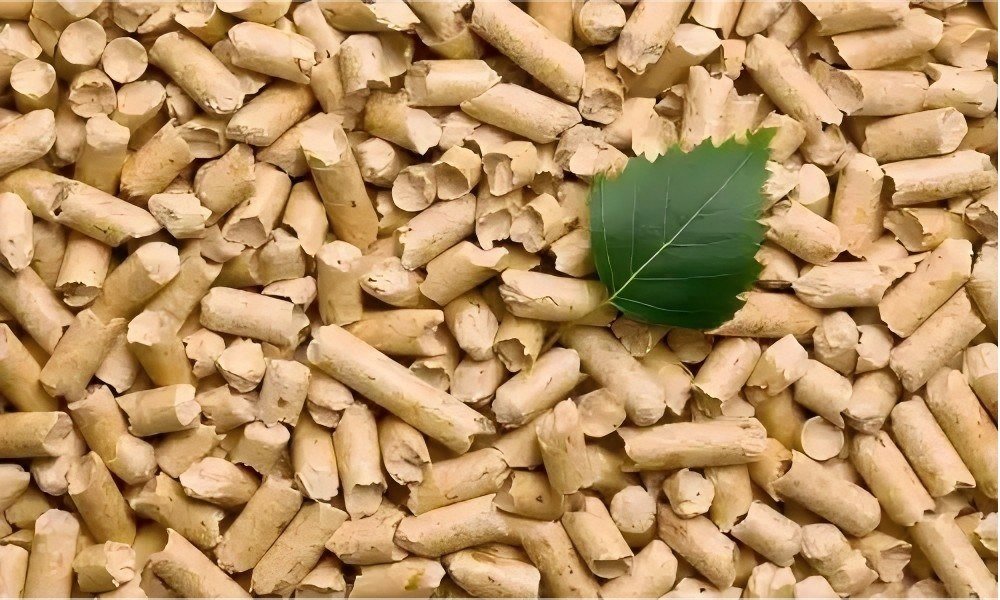
Biomass fuel pellets are dense cylindrical fuel products produced by compressing organic materials under high pressure. The pelletizing process increases density, making biomass easier to transport, store, and burn efficiently.
Pellets are commonly used in:
- Biomass power plants
- Industrial steam boilers
- Residential heating systems
- Commercial heating facilities
- Agricultural drying systems
The quality of biomass pellets largely depends on the raw materials used during production.
2. What Makes a Good Biomass Pellet Raw Material?
Not all biomass materials are equally suitable for pellet production. Good pellet raw materials should have:
- Moderate moisture content
- High calorific value
- Low ash content
- Good fiber structure
- Strong binding ability
- Abundant availability
- Low transportation cost
The best raw materials also pelletize easily in a biomass pellet mill without excessive energy consumption or machine wear.
3. Wood Waste: One of the Best Pellet Raw Materials
Wood waste is considered one of the highest-quality raw materials for biomass pellets.
Common wood materials include:
- Sawdust
- Wood shavings
- Wood chips
- Furniture waste
- Forestry residues
Advantages of wood materials
- High calorific value
- Low ash content
- Strong natural lignin binding
- Excellent combustion performance
- Stable pellet quality
Wood fibers contain natural lignin that softens during pelletizing and acts as a natural binder inside the biomass pellet mill.
4. Sawdust Pellets
Sawdust is one of the most widely used pellet materials worldwide.
Why sawdust is ideal
- Uniform particle size
- Easy to compress
- Low moisture after drying
- High energy density
Sawdust pellets are commonly exported for industrial and residential heating applications.
5. Rice Husk as Biomass Pellet Material
Rice husk is one of the most abundant agricultural wastes in rice-producing countries.
Large quantities of rice husks are generated during rice milling, making them an important biomass resource.
5.1 Advantages of Rice Husk
- Widely available
- Low raw material cost
- Renewable agricultural residue
- Suitable for industrial fuel
Rice husk pellets are commonly produced using a husk pellet machine designed specifically for difficult agricultural materials.
5.2 Challenges of Rice Husk Pelletizing
Rice husks contain high silica content, which creates several challenges:
- Increased machine wear
- Higher ash content
- Lower natural binding ability
Because of these characteristics, a high-quality husk pellet machine is essential for stable production.
6. Wheat Straw and Crop Straw
Crop straw is another major biomass pellet raw material.
Common straw materials include:
- Wheat straw
- Rice straw
- Barley straw
- Oat straw
Advantages
- Large agricultural supply
- Low material cost
- Renewable resource
- Good combustion value
Challenges
- Bulky transportation
- Seasonal availability
- High ash content
Proper grinding and moisture control are essential before processing straw in a biomass pellet mill.
7. Corn Stalks and Corn Residues
Corn stalks are widely used in biomass fuel production, especially in major agricultural regions.
Benefits
- Abundant availability
- Good energy content
- Utilization of agricultural waste
Production considerations
Corn stalks require:
- Crushing
- Drying
- Proper fiber treatment
Modern biomass pellet mill systems can efficiently process corn residues into durable fuel pellets.
8. Peanut Shells
Peanut shells are another valuable biomass raw material.
Advantages
- High calorific value
- Good combustion performance
- Relatively low moisture
Applications
Peanut shell pellets are suitable for:
- Industrial boilers
- Biomass heating systems
- Commercial fuel applications
https://pelletisingmachine.com/peanut-shell-pellet-machine
9. Bagasse (Sugarcane Waste)
Bagasse is the fibrous residue left after sugarcane juice extraction.
Advantages
- Large supply in sugar-producing regions
- Good renewable energy potential
- High cellulose content
Bagasse pellets are increasingly used in biomass power plants.
10. Bamboo Waste
Bamboo processing industries generate large amounts of waste suitable for pelletizing.
Benefits
- High density
- Good heating value
- Strong fiber structure
Bamboo pellets are considered high-quality biomass fuel products.
11. Palm Fiber and Palm Kernel Shell
Palm oil industries produce large quantities of biomass residues.
Common materials include:
- Palm fiber
- Palm kernel shell
- Empty fruit bunches
These materials are widely used in Southeast Asia for biomass energy production.
12. Animal Manure as Biomass Fuel
Animal manure such as cow dung and poultry litter can also be pelletized for fuel applications.
Advantages
- Waste recycling
- Reduced environmental pollution
Challenges
- High ash content
- Lower calorific value
- Odor management
Specialized drying systems are usually required.
13. Importance of Moisture Content
Moisture content is one of the most critical factors affecting pellet quality.
Ideal moisture range
- 10%–15% before pelletizing
Problems caused by excess moisture
- Pellet cracking
- Machine blockage
- Reduced combustion efficiency
Proper drying systems improve biomass pellet mill performance.
14. Importance of Particle Size
Raw materials must be properly crushed before pelletizing.
Uniform particle size improves:
- Pellet density
- Machine efficiency
- Combustion performance
Hammer mills are commonly used before feeding materials into the biomass pellet mill.
15. The Role of the Biomass Pellet Mill
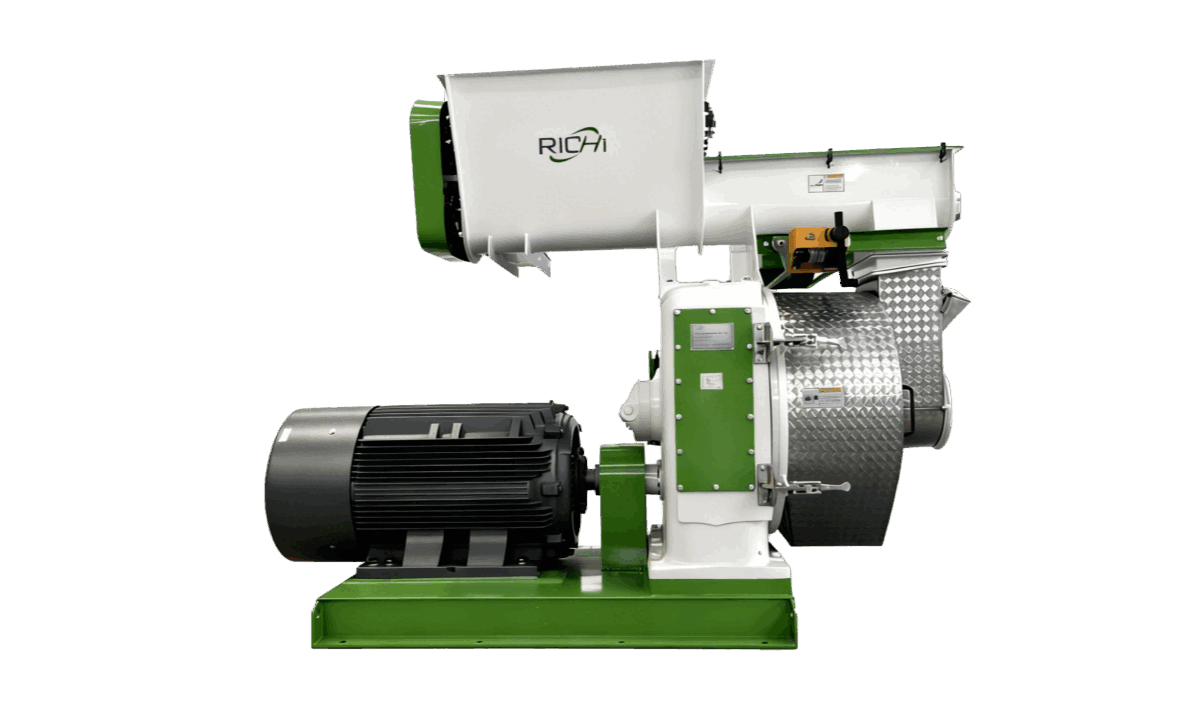
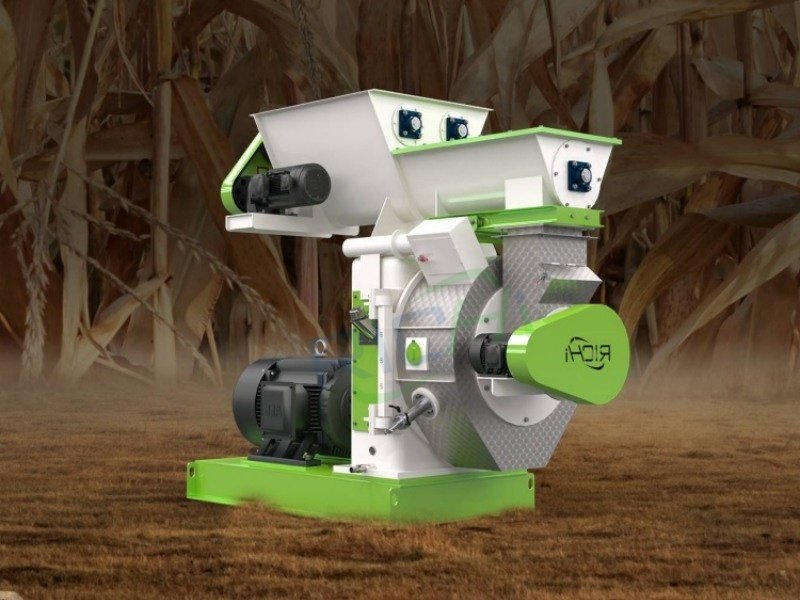
The industrial biomass pellet mill is the core equipment in pellet production.
How it works
- Raw material enters the pellet chamber
- Rollers compress material through a die
- High pressure forms dense pellets
- Pellets are cut into uniform sizes
The machine transforms loose biomass into compact fuel products.
16. Why a Husk Pellet Machine Is Important
Agricultural materials such as rice husks are difficult to pelletize due to low fiber binding and high silica content.
The husk pellet machine is specially designed to:
- Handle abrasive materials
- Improve compression efficiency
- Produce durable pellets
- Reduce machine wear
Without proper equipment, rice husk pellet production becomes inefficient.
17. Ash Content and Fuel Quality
Ash content affects combustion performance.
Low ash materials
- Wood waste
- Sawdust
- Bamboo
High ash materials
- Rice husk
- Straw
- Manure
Lower ash content generally means cleaner combustion and less maintenance for boilers.
18. Calorific Value Comparison
Different materials provide different heating values.
High calorific value materials
- Wood pellets
- Peanut shells
- Palm kernel shells
Moderate calorific value materials
- Straw
- Rice husk
- Corn stalks
Higher calorific value improves fuel efficiency.
19. Environmental Benefits of Biomass Raw Materials
Using agricultural and forestry waste for pellets provides several environmental benefits:
- Reduced open burning
- Lower landfill waste
- Reduced greenhouse gas emissions
- Improved waste management
Biomass pellets support renewable energy development and circular economy systems.
20. Economic Considerations in Raw Material Selection
The best raw material is not always the highest-quality one. Economic factors are also important.
Key considerations include:
- Local availability
- Transportation cost
- Seasonal supply
- Storage requirements
- Processing difficulty
Sometimes low-cost agricultural waste provides higher profitability despite lower fuel quality.
21. Automation and Modern Pellet Technology
Modern biomass pellet plants increasingly use automation systems for:
- Moisture monitoring
- Temperature control
- Production optimization
- Automatic lubrication
Advanced biomass pellet mill systems improve efficiency and reduce operating costs.
22. Future Trends in Biomass Pellet Raw Materials
Future biomass industries are exploring:
- Mixed biomass pellets
- Energy crop pellets
- Algae biomass
- Municipal organic waste
Technology improvements will allow more diverse materials to be processed efficiently.
Conclusion
Choosing the best raw materials for biomass fuel pellets is essential for achieving high pellet quality, stable combustion performance, and profitable production. Wood waste remains one of the highest-quality materials due to its low ash content and excellent binding properties, while agricultural residues such as rice husks, straw, and corn stalks provide abundant and low-cost renewable resources.
Modern equipment such as the husk pellet machine and biomass pellet mill allows a wide range of biomass materials to be processed into valuable renewable fuel products. As renewable energy demand continues increasing worldwide, biomass pellet production will play an increasingly important role in reducing fossil fuel dependence and supporting sustainable energy development.