


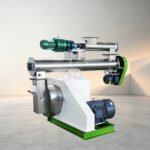
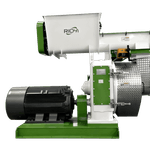

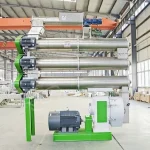

A fish feed pellet making machine must be selected by the feed form it is expected to produce. A ring-die pellet mill is generally used for sinking, compact aquatic feed pellets, while floating and slow-sinking products normally require an extrusion process. The distinction affects more than the main machine: grinding fineness, conditioning, die or screw configuration, drying, coating, cooling and quality testing all change with the product.
RICHI’s fish feed pellet making machine page lists a product range covering ring-die pellet mills and fish feed extruders, with a broad stated production capacity of 0.2–12 t/h and pellet sizes of 1–12 mm. The ring-die series table lists SZLH250 through SZLH768, with model-specific capacity and motor power, while wet-type and dry-type extruder configurations are presented separately. Buyers should not compare these figures as if the machines perform the same process: first define sinking, floating or slow-sinking feed, then select the appropriate production route.
Decide What the Pellet Must Do in Water
The product specification should describe the intended fish species and growth stage, pellet diameter, density, sinking behavior, water stability, durability and expected feeding method. Sinking feed should reach the feeding zone without excessive fines or rapid disintegration. Floating feed needs a density and internal structure that allow it to remain at the surface for the required observation period. Slow-sinking feed requires a controlled balance between expansion and density. Shrimp and crab feeds can require additional attention to water stability and pellet hardness.
A ring-die pellet mill produces compact pellets by forcing conditioned mash through die holes under mechanical pressure. This is appropriate for sinking feed where a dense structure is required. Extrusion uses heat, moisture, pressure and shear to cook and expand the mixture as it passes through the die. The resulting internal structure can reduce bulk density and support floating behavior. A plant that promises both sinking and floating products may therefore need a pellet mill and an extruder, or a carefully justified flexible configuration.
Do not infer the product type from the phrase fish feed alone. Ask the buyer to provide target species, pellet size, water stability or floating-time requirements, daily output and formula characteristics. If shrimp feed is included, confirm whether it requires a fine, dense pellet with extended water stability; this may influence grinding, conditioning and die compression more than the nominal capacity of the press.
Match Grinding Fineness to the Smallest Product
Particle size is a critical upstream variable. Larger particles can create rough surfaces, weak pellet structure and inconsistent die or extruder feeding, particularly for small-diameter aquatic feed. Fine grinding increases energy use and can affect throughput, so the grinding target should be based on the smallest pellet and the product quality required. The process may need more than one grinding stage when the plant makes both larger fish pellets and fine shrimp feed.
The RICHI page describes an integrated process that includes ultra-fine grinding, mixing, drying, coating, cooling, screening and packaging. Its project reference for a shrimp and fish feed line reports raw materials ground to 80–120 mesh or finer for the stated application. This is a project-specific reference, not a universal specification for all fish feed. The buyer should validate particle-size distribution against the formulation, pellet diameter, die or screw system and water-stability test.
A grinding system should include cleaning and metal removal before the hammer mill or pulverizer. The storage and conveying layout must prevent coarse particles from bypassing the selected screen. If several formulas are processed, identify whether dedicated bins or cleaning between batches are needed to avoid cross-contamination. Record screen condition and actual particle-size results during commissioning rather than relying only on the nominal screen aperture.
Choose Ring-Die Pelleting for Dense Sinking Feed
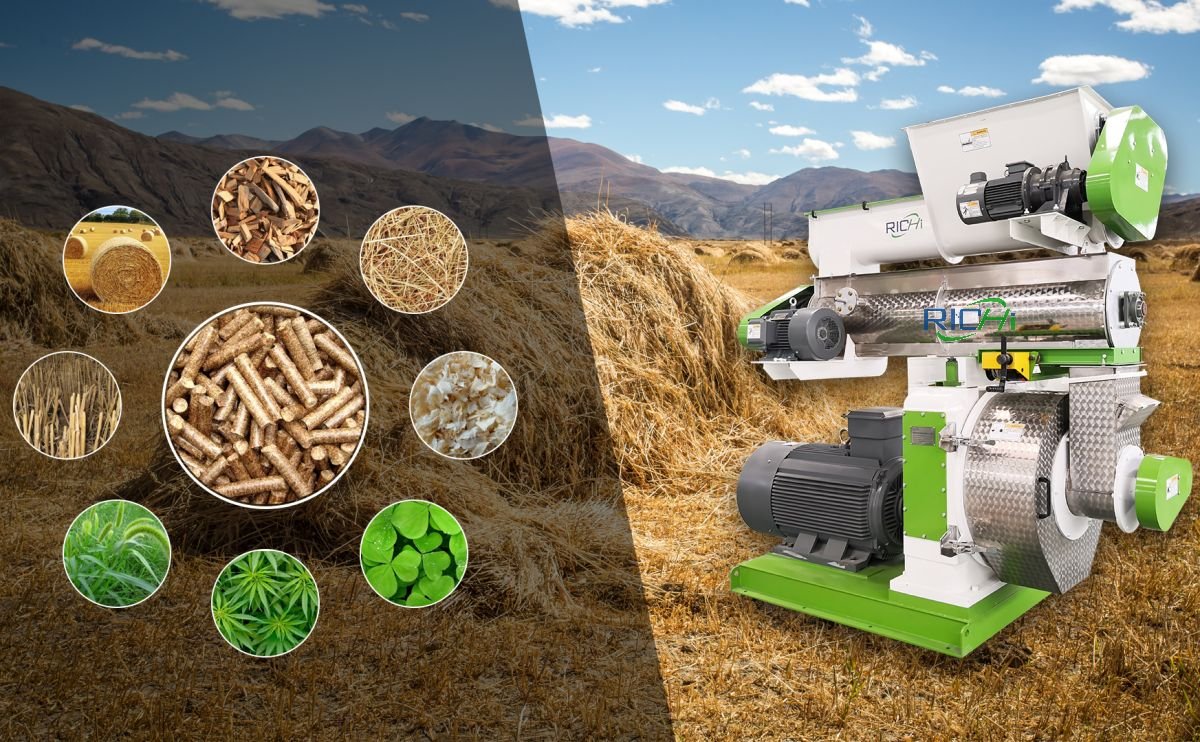
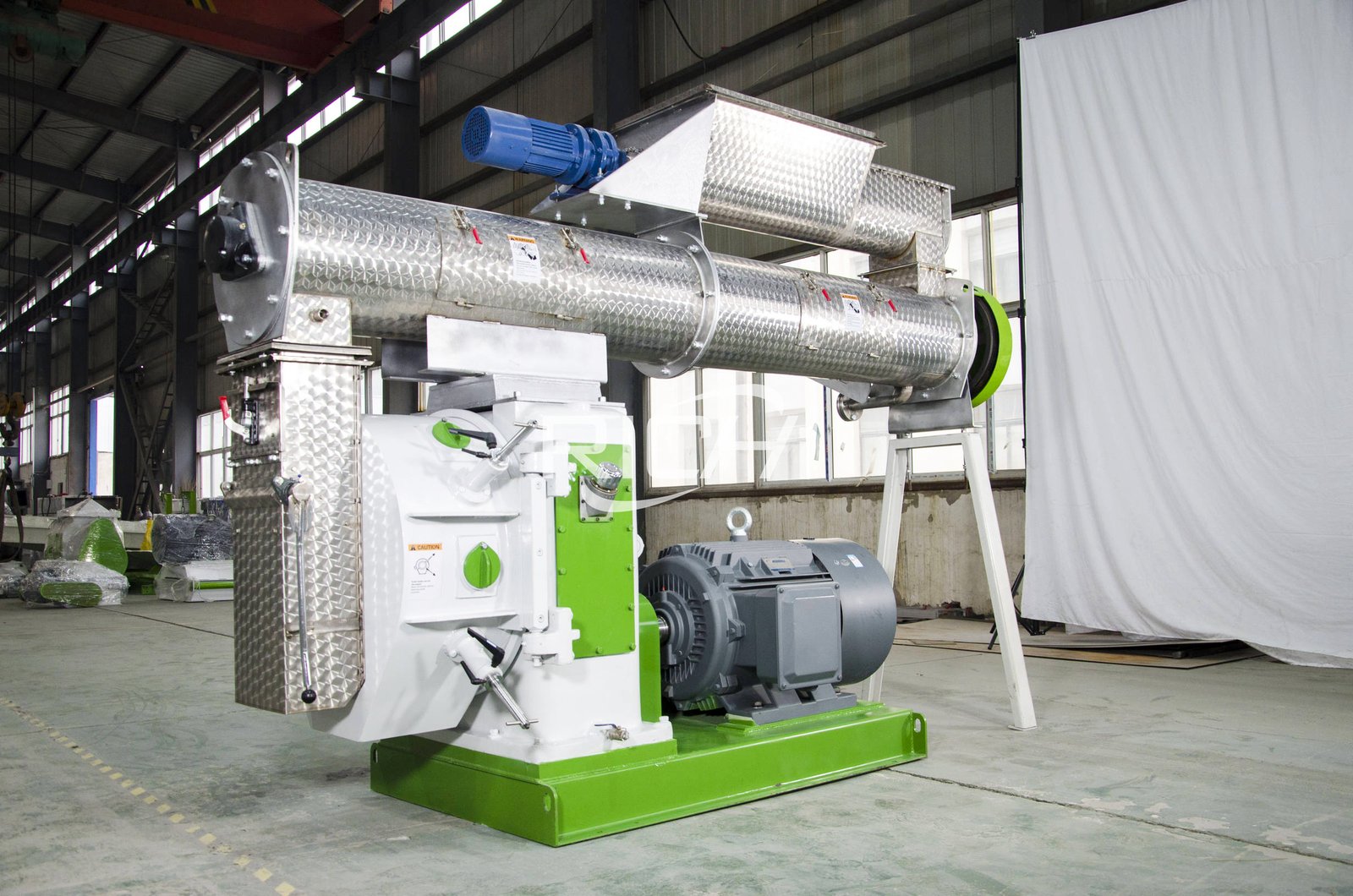
For sinking fish feed, a ring-die pellet mill uses a feeder, conditioner, die and rollers to form compact pellets. RICHI describes a three-layer steam conditioner for deep gelatinization and improved water stability. Conditioning affects moisture, temperature and starch transformation, so the steam supply and conditioner control should be treated as part of the process rather than a simple accessory. The correct settings depend on formula, moisture, throughput and pellet specification.
The published SZLH ring-die table lists capacity from 1.0–1.5 t/h for SZLH250, 3–4 t/h for SZLH320, 5–6 t/h for SZLH350, 10–12 t/h for SZLH420, and higher values for larger models. The listed main motor power ranges from 22 kW to 315 kW. These model values must be read with the table’s conditions and should not be assumed to apply to every aquatic feed formulation. The actual operating rate can change with formula, grinding fineness, conditioning and die specification.
The page also states that the ring-die fish feed pellet machine is designed for sinking, hard-textured pellets and does not produce floating feed. This is an important equipment boundary. If a project requires floating feed, do not rely on a ring-die pellet mill alone. Specify the extruder and its downstream drying and coating system in the process flow from the beginning.
Select Extrusion for Floating and Slow-Sinking Products
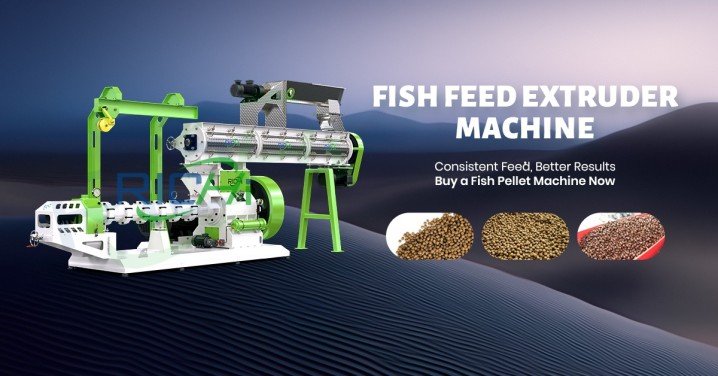
A fish feed extruder cooks and shapes the mixture through a screw and die. Wet-type extrusion uses preconditioning with steam and water before the material enters the screw barrel. The page lists wet-type fish feed extruder capacity from 0.5–12 t/h, with main power from 37–75 kW and screw diameters from 75–185 mm. A dry-type extruder is listed at 0.2–1.0 t/h with main power from 37–90 kW and screw diameters from 90–160 mm. These are distinct configurations and should be matched to product range, output and utility availability.
Wet extrusion may be preferable when continuous commercial production, formula flexibility and controlled preconditioning are important. Dry extrusion may suit smaller output or simpler process conditions where a steam-conditioning system is not available or justified. Neither should be selected by capacity alone. Compare formula composition, target expansion, pellet diameter, product density, cooking degree, operator capability and maintenance requirements.
The screw configuration, die opening, cutter speed and operating settings influence pellet shape and expansion. Floating performance should be verified through a defined test using the customer’s formula. The project should record moisture, temperature, screw speed, feed rate, die, cutter setting and the resulting floating or sinking behavior. A machine’s ability to extrude a pellet does not prove that the pellet will meet the buyer’s required water performance.
Treat Drying and Coating as Part of Extrusion Capacity
Freshly extruded floating feed usually requires drying before coating, cooling and packing. The dryer must be sized for the water-removal duty and the actual product flow. Confirm inlet moisture, target moisture, pellet diameter, heat sensitivity, residence time and heat source. If the dryer is undersized, the extruder may need to reduce output even when the extrusion chamber is stable.
Oil or other liquid coating may be applied after drying to meet energy density, palatability or product requirements. The coating system should distribute liquids uniformly without damaging the pellets. A vacuum coater or other suitable system may be considered depending on the product and investment scope. The buyer should define whether the coating is included in the line capacity and how uniformity will be checked.
Cooling and screening follow drying and coating as required. The cooler should reduce product temperature before storage, while the screen removes fines and broken pieces. Packaging must protect feed from moisture and physical damage. The capacity of dryer, coater, cooler, screen and packing equipment should be balanced with the extruder’s saleable output, not just its instantaneous discharge rate.
Integrate Steam, Water, Power and Process Controls
The utility schedule should include the main drive, feeder, conditioner, grinder, mixer, dryer, fans, coater, cooler, screen, conveyors and packing equipment. Wet extrusion and steam conditioning require a reliable boiler and steam distribution system. Confirm steam pressure and quality at the equipment, condensate handling, water treatment, piping, insulation and safety devices. Dry extrusion may reduce steam infrastructure but still requires controlled moisture and electrical capacity.
Controls should coordinate upstream and downstream machines so that material is not fed into a stopped process section. Verify motor rotation, overload protection, emergency stops, interlocks, alarms and safe shutdown logic. For multiple product types, the control system should support recipe identification, settings records and controlled changeovers. Maintenance access to screws, barrels, dies, cutters and conditioner components should be included in the plant layout.
Commission With the Customer’s Formula and Water Test
A meaningful trial should use representative ingredients and the actual formula planned for commercial production. Record ingredient batch, grinding fineness, formula, moisture, steam and water addition, conditioner settings, screw or die configuration, feed rate, motor load, temperature, cutter setting, dryer conditions and final pellet properties. For sinking pellets, test density, dimensions and water stability. For floating pellets, define the observation method and required floating time. For shrimp feed, include the agreed water-stability and fines criteria.
Acceptance should distinguish machine throughput from finished product after drying, coating, cooling and screening. Define test duration, sampling method, utility conditions, target product and the treatment of start-up or formula changeover. If a line will make both sinking and floating feed, test each route separately. A successful trial on sinking pellets does not validate floating performance, and vice versa.
If the product is outside specification, investigate the process in sequence: raw material, grinding, batching, mixing, conditioning, pelletizing or extrusion, drying, coating and cooling. Record adjustments and repeat the trial under comparable conditions. This creates a traceable handover and gives operators a validated operating window for routine production.
Conclusion: Select the Process by Feed Behavior, Not by Name
The right fish feed pellet making machine depends on what the feed must do after it enters the water. Ring-die pelleting is suited to dense sinking feed, while extrusion is the relevant route for floating and slow-sinking products. Grinding, conditioning, drying, coating and cooling must be balanced with the selected forming process and the actual formula.
For machine types and model details, review the RICHI fish feed pellet making machine range. Prepare the species, formula, pellet dimensions, water-performance requirements, target output and utility conditions before finalizing the equipment scope.