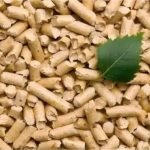


Prawn farming has a reputation problem that has nothing to do with the prawns themselves. It has to do with feed.
Ask any prawn farmer in Vietnam, Bangladesh, India, or Ecuador what worries them most, and the answer usually comes back the same: feed quality. Not feed price alone, not feed availability, but the consistency of the feed they receive. A batch that performs well in one pond may perform poorly in the next. A supplier who delivers excellent feed in January may deliver something different in June.
This inconsistency is not always the feed mill’s fault. Prawn feed sits at the intersection of several difficult variables: sensitive animals, complex formulas, variable raw materials, and a production process that has to be controlled precisely. When any one of these variables shifts, the final product changes.
This article explains why prawn feed quality is difficult to control, what causes the variation, and what farmers and feed producers can actually do about it.
Why Prawns Are Harder to Feed Than Fish
Prawns and fish share the same water, but they do not share the same feeding habits.
Fish are generally active swimmers. They move through the water column, respond quickly to feeding, and can be trained to come to a feeding spot. Prawns are different. They are benthic animals, meaning they live and feed near the bottom. They move slowly. They rely on chemical cues to find feed. And they take much longer to consume a single pellet.
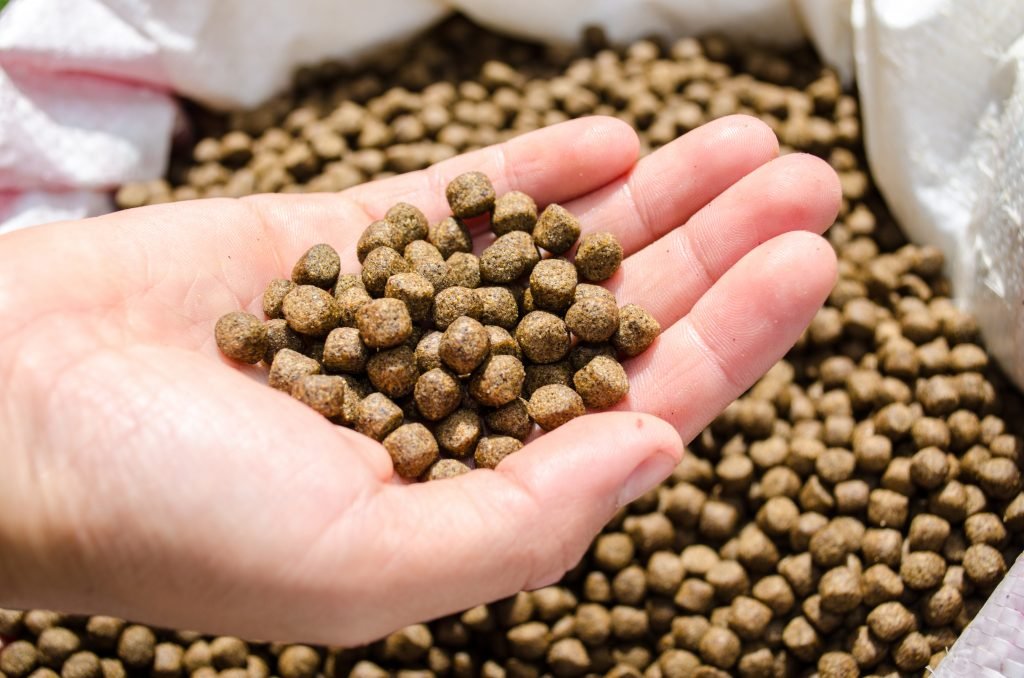
This slow feeding behavior has a direct effect on feed design. A pellet that works for tilapia or catfish may sink too quickly and disappear into the mud before the prawns find it. Or it may break apart too fast, releasing nutrients into the water where they feed algae instead of prawns.
Water stability is therefore critical. A prawn feed pellet needs to hold together for several hours in water. It needs to remain attractive to the prawn throughout that time. It also needs to be soft enough for the prawn to bite and chew, but firm enough not to dissolve.
These requirements are not easy to meet simultaneously. Improving one property often weakens another. A harder pellet may last longer in water but become less palatable. A softer pellet may be eaten more readily but break down too fast. Feed producers spend a great deal of effort balancing these trade-offs.
There is also the molting cycle to consider. Prawns shed their shells periodically as they grow. During and shortly after molting, they are vulnerable and may reduce feeding. Their nutritional needs also shift. A single feed formula cannot serve all stages equally well. This is why prawn feed is usually produced in multiple grades, and why the transition between grades matters.
The Raw Material Problem
If prawn feed quality were only a matter of processing, it would be easier to control. But raw materials introduce another layer of variation.
The most important protein source in prawn feed has traditionally been fishmeal. It has the right amino acid profile, it is highly digestible, and prawns respond well to it. The problem is that fishmeal is a natural product, and natural products vary.
Fishmeal from one supplier may differ from fishmeal from another in protein content, fat content, ash content, freshness, and digestibility. Even within a single supplier, quality can shift from batch to batch depending on the species used, the fishing season, and the processing method. A feed mill that does not test incoming fishmeal carefully will produce feed with inconsistent nutritional value.
Fishmeal prices have also risen sharply, which pushes producers toward alternatives. Soybean meal, poultry by-product meal, krill meal, and single-cell proteins are all used to replace part of the fishmeal. Each substitute has different functional properties. Some bind well in extrusion. Others do not. Some improve palatability. Others reduce it. Replacing fishmeal is not simply a matter of matching protein percentages.
Starches and binders introduce further variation. Wheat flour is a common binder in prawn feed, but wheat quality changes with growing conditions. Tapioca starch behaves differently from corn starch. The extrusion process responds to these differences, and the final pellet properties change accordingly.
Lipids are another variable. Fish oil, squid oil, and vegetable oils are used for energy and essential fatty acids. These oils oxidize over time, especially in warm climates. Oxidized oil reduces feed quality and can harm prawn health. Storage conditions and freshness matter as much as the type of oil used.
Additives, including vitamins, minerals, attractants, and mold inhibitors, are usually supplied in small quantities. But their quality and stability vary. A vitamin premix that has lost potency during storage will not deliver the intended nutritional value, even if it was correctly included in the formula.
The result is that a feed mill can follow the same formula and still produce feed that performs differently from one month to the next. This is not a failure of the formula. It is a failure to control the inputs.
Where the Production Process Goes Wrong
Even with consistent raw materials, prawn feed production has several stages where quality can drift.
Grinding is the first. Prawn feed requires fine grinding because prawns have small mouths and limited ability to digest coarse particles. If the grinder screens wear out or the feed rate is too high, particle size increases. The extruder then has to work harder, and the final pellet may be less uniform.
Mixing is the second. Prawn feed formulas often include ingredients at very low inclusion rates, such as vitamins, minerals, and attractants. If mixing is not thorough, these ingredients are distributed unevenly. Some pellets get more than they need. Others get less. The average may be correct, but the variation is not.
Extrusion is the most sensitive stage. The extruder relies on a balance of moisture, heat, pressure, and screw speed. Small changes in any of these variables affect starch gelatinization, protein denaturation, pellet density, and water stability. If the operator adjusts settings based on feel rather than measurement, the process drifts.
Drying follows. If the dryer temperature is too high, the pellet surface hardens and internal moisture remains trapped. If the temperature is too low, drying takes too long and the pellet may not reach the target moisture. Uneven drying creates variation in hardness and water stability across the batch.
Coating is where oil and some additives are applied. Vacuum coating is preferred for prawn feed because it draws oil into the pellet. If the vacuum is insufficient or the coating time is too short, oil stays on the surface. Surface oil washes off quickly and causes pellets to clump.
Cooling and packaging are the final steps. If the feed is bagged while still warm, condensation forms inside the bag. This leads to mold during storage, especially in humid climates.
Each of these stages is controllable. But control requires measurement, and measurement requires discipline. A feed mill that relies on experience alone will produce variable feed. A mill that uses data will produce consistent feed.
What Farmers See in the Pond
Farmers do not see the extrusion process or the drying curve. They see the results in the pond.
The first thing they notice is feeding response. If prawns do not come to the feed or do not consume it within the expected time, something has changed. This may be a feed issue, a water quality issue, or a health issue. Distinguishing between them requires observation and experience.
The second thing they notice is feed disappearance. Prawn feed that breaks down too quickly seems to vanish. Farmers may interpret this as strong feeding activity when in fact the feed is dissolving. The nutrients are entering the water, not the prawns.
The third thing they notice is the pond bottom. Uneaten feed and fine particles accumulate on the bottom. Over time, this contributes to sludge buildup, oxygen depletion, and disease pressure. Farmers who manage their ponds well pay close attention to what is left on the bottom after feeding.
The fourth thing they notice is growth. If prawns are not growing as expected despite adequate feeding, the feed may be deficient in some way. Or the feed may be fine but the prawns are unable to digest it because of health or water quality problems.
The fifth thing they notice is cost. Feed is the largest operating expense in prawn farming. Farmers track feed cost per kilogram of prawn produced, not just the price per bag. A cheaper feed that produces poor growth or high mortality is not cheaper at all.
What Makes a Reliable Prawn Feed Machine
When feed producers talk about equipment, they often focus on capacity and price. But for prawn feed, reliability and control matter more.
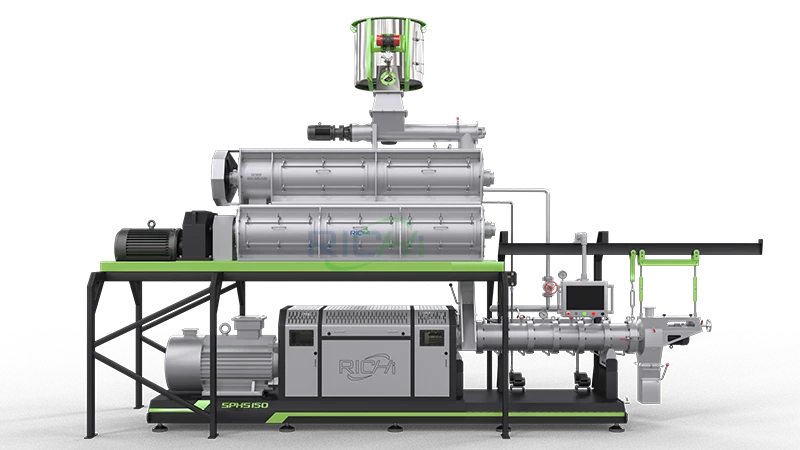
A prawn feed machine has to handle fine grinding, precise mixing, controlled extrusion, uniform drying, and accurate coating. Each of these functions depends on the machine’s design and construction.
The extruder is the most important component. It must be able to maintain consistent temperature, pressure, and retention time across long production runs. It must also be adjustable, because prawn feed formulas change and the machine has to respond to those changes without losing control.
The dryer must distribute heat evenly. Uneven airflow creates hot spots and cold spots, which leads to variation in moisture content. A well-designed dryer uses controlled airflow and temperature to dry the feed uniformly.
The coating system must be accurate. Over-coating wastes oil and creates handling problems. Under-coating reduces nutritional value. A vacuum coater that can apply a precise amount of oil and distribute it evenly is essential for prawn feed.
The control system matters too. If the machine relies on manual adjustments, the operator becomes the control system. If the operator is experienced and attentive, quality may be acceptable. If not, quality drifts. Automated control reduces this dependency and makes it easier to maintain consistent output.
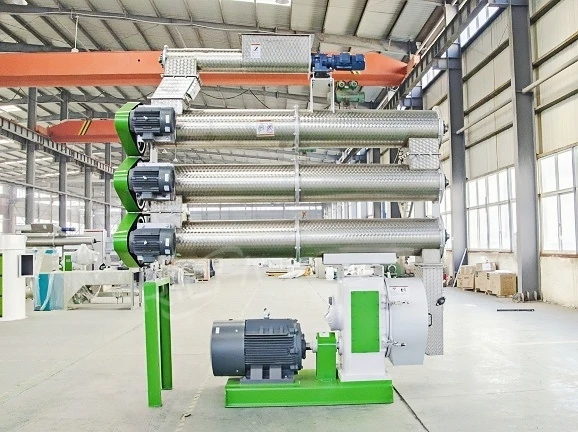
For feed producers who are scaling up or replacing older equipment, an industrial prawn feed machine for sale should be evaluated not just on capacity but on its ability to hold quality steady over time. A machine that produces excellent feed for one week but drifts in the second week is not a reliable machine.
The Role of Feed Formulation
Equipment and raw materials set the boundaries. Formulation determines what happens within those boundaries.
A prawn feed formula has to meet nutritional requirements, but it also has to work in the extruder. If the formula is too high in fat, the pellet may be soft and difficult to dry. If it is too low in starch, the pellet may not bind well. If it includes ingredients that are difficult to grind, the grinding stage becomes a bottleneck.
Formulation also has to account for cost. Fishmeal is expensive. Alternative proteins are cheaper but may not perform as well. The formulator has to find a balance that meets nutritional needs, processing requirements, and cost targets.
This balance is not fixed. Raw material prices change. New ingredients become available. Customer requirements evolve. A formula that worked well last year may need adjustment this year.
Feed producers who treat formulation as a one-time task will struggle. Those who treat it as an ongoing process, with regular review and adjustment, will perform better.
Quality Control That Works
Quality control in prawn feed production should be practical, not ceremonial.
Incoming raw material testing is the first step. Fishmeal should be tested for protein, fat, moisture, and freshness. Starches should be tested for binding properties. Oils should be tested for oxidation. If incoming materials are not tested, the feed mill is guessing.
Process monitoring is the second step. Grinding particle size, mixing uniformity, extrusion temperature and pressure, drying moisture, and coating application should all be monitored. This does not require a large laboratory. It requires a few instruments and the discipline to use them.
Finished product testing is the third step. Water stability, pellet durability, moisture content, bulk density, and nutritional composition should be checked. These tests tell the mill whether the process is under control.
Traceability is the fourth step. If a problem is found in the field, the mill should be able to identify which batch was affected and what might have caused the problem. Without traceability, every problem becomes a mystery.
Feedback from farmers is the fifth step. Farmers see things that the mill cannot see. Their observations about feeding response, growth, and pond conditions are valuable data. A mill that ignores this feedback is missing an important source of information.
Quality control is not about passing inspections. It is about producing feed that performs consistently in the pond.
Common Mistakes in Prawn Feed Production
Several mistakes appear repeatedly in prawn feed operations.
Chasing cheap raw materials. Lower-cost ingredients often come with higher variability. The savings may be lost through inconsistent feed performance.
Ignoring water stability. A pellet that looks good in the mill may fail in the pond. Water stability must be tested routinely.
Under-investing in grinding. Fine grinding is essential for prawn feed. A mill that cuts corners here will struggle at every subsequent stage.
Neglecting drying. Drying is often treated as a minor step. In reality, it has a major effect on pellet quality and storage life.
Skipping operator training. Extrusion is a skill. Operators who do not understand the process cannot control it.
No maintenance plan. Worn dies, hammers, and screens change the process. Regular maintenance keeps quality stable.
Poor communication with farmers. Feed producers who do not listen to their customers miss important signals about product performance.
Avoiding these mistakes requires attention and commitment, but it is not complicated. The basics matter more than advanced technology.
Working with the Right Supplier
Prawn feed production is a specialized field. Not every equipment supplier understands it.
A supplier who primarily serves poultry or livestock feed producers may not appreciate the specific requirements of prawn feed. They may recommend equipment that is not suited to fine grinding, sinking pellets, or vacuum coating.
A supplier who understands prawn feed will ask different questions. They will ask about target pellet size, water stability requirements, raw material characteristics, and the intended farming system. They will design the line around these requirements rather than offering a standard package.
They will also provide support during installation, commissioning, and the early months of production. This is when most problems appear, and having technical support available makes a significant difference.
For feed producers who are planning a new line or upgrading an existing one, working with an experienced manufacturer such as Richi Manufacture can reduce the risk of costly mistakes. The right partner brings process knowledge, not just equipment.
The Economics of Better Quality
It is tempting to focus on the cost of producing feed rather than the value of the feed produced. But in prawn farming, quality has a direct effect on economics.
Better feed means better feed conversion. Prawns gain more weight per unit of feed consumed. This reduces the largest cost in the operation.
Better feed means better water quality. Less uneaten feed and fewer fines mean less organic load in the pond. This reduces the risk of oxygen depletion and disease.
Better feed means more consistent growth. Prawns reach market size more uniformly, which simplifies harvesting and improves revenue.
Better feed means fewer surprises. Farmers can plan their operations with more confidence when they know what to expect from their feed.
The cost of better feed is real. Better raw materials, better equipment, and better quality control all require investment. But the return on that investment is usually positive, especially over multiple production cycles.
Where the Industry Is Going
Several trends are shaping prawn feed production.
Alternative proteins are becoming more viable. Insect meal, single-cell proteins, and fermented plant proteins are being tested and adopted. Each new ingredient requires process adjustments, but the direction is clear.
Functional feeds are growing in importance. These feeds are designed not just to support growth but to improve health, immunity, and stress tolerance. They place higher demands on mixing and coating equipment.
Precision feeding is gaining attention. Instead of feeding a fixed amount, farmers are using sensors and models to adjust feeding based on actual consumption. This requires feed that performs predictably.
Sustainability requirements are increasing. Buyers in major markets are asking about the environmental impact of prawn production, including feed. This is pushing producers toward responsible sourcing and efficient processing.
Digital tools are entering feed mills. Data logging, process analytics, and remote monitoring are becoming more common. These tools help mills identify problems earlier and optimize their processes.
For equipment suppliers, these trends mean that flexibility and support matter more than ever. A feed mill that can adapt to new ingredients, new formulas, and new quality requirements will remain competitive. One that cannot will fall behind.
Final Thoughts
Prawn feed quality is difficult to control because it depends on many variables at once. The animals are sensitive, the raw materials vary, the process is complex, and the results are only visible in the pond.
But difficulty is not the same as impossibility. Feed producers who understand the variables, measure their processes, and stay close to their customers can produce consistent, high-quality feed. Those who rely on habit and guesswork will struggle.
For anyone planning to invest in prawn feed production, the starting point is a clear understanding of the target market, the required feed specifications, and the raw materials available. From there, equipment selection, line design, and quality control follow.
The prawn feed machine is part of the picture, but it is not the whole picture. The real work is in understanding the animal, the process, and the economics of production. Getting those fundamentals right is what separates successful feed operations from the rest.