
SEO Title: Straw Pellet Production Process and Equipment Guide
Page Description: Learn how straw is converted into biomass pellets, including raw material preparation, pelletizing, cooling, screening, and storage.
Straw Pellet Production: From Agricultural Residues to Fuel
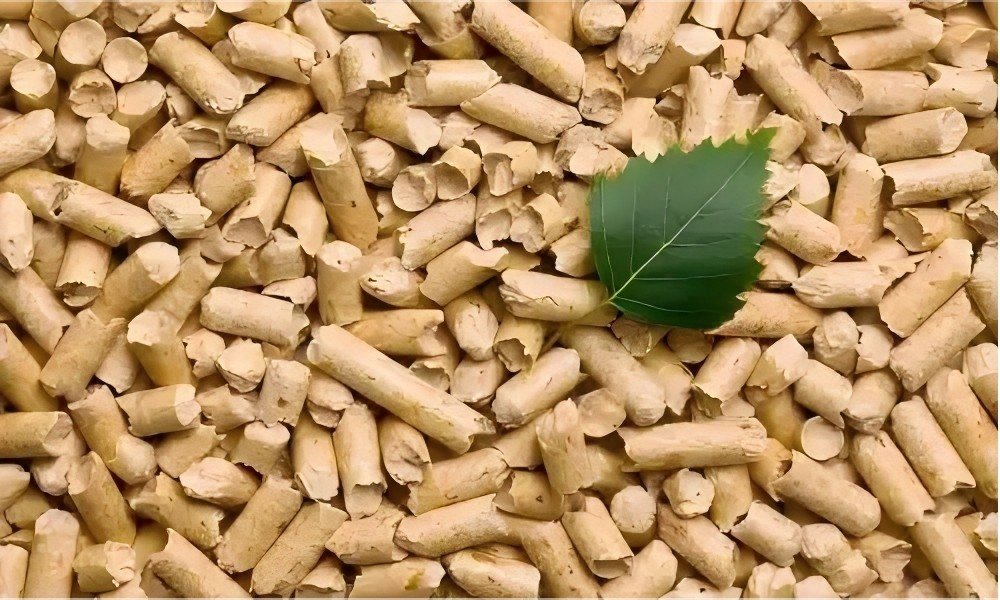
Straw is one of the most widely available agricultural residues in many farming regions. Wheat straw, rice straw, corn straw, and other crop residues can accumulate rapidly after harvesting, creating storage and disposal challenges. Pelletizing provides a practical way to convert this low-density material into a standardized biomass fuel.
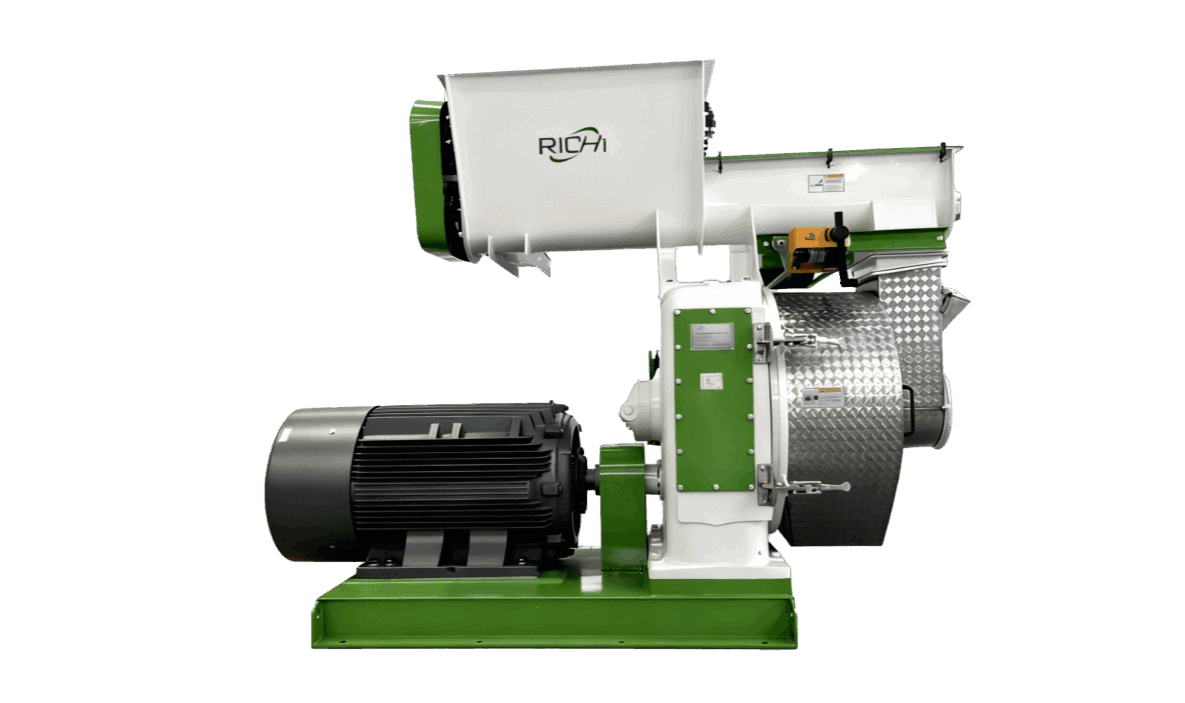
A straw pellet mill compresses prepared straw into dense cylindrical pellets. However, successful production depends on the entire process, because straw has different physical characteristics from materials such as sawdust or wood chips.
Why Is Straw Suitable for Pellet Production?
Loose straw has a low bulk density and can be difficult to transport economically. Its long fibers can also make direct feeding into processing equipment inconsistent.
Pelletizing changes these characteristics.
Straw pellets are easier to:
- Store in a limited space
- Transport over longer distances
- Feed into biomass heating systems
- Pack into standardized bags
- Handle with conveyors and other equipment
For farms and agricultural processors, pellet production can also create an additional use for residues that might otherwise be burned, left in fields, or disposed of.
Preparing Straw Before Pelletizing
Raw straw normally needs size reduction before it enters the pelletizing section.
Long stalks can wrap around equipment or create unstable feeding conditions, so a crusher or hammer mill is commonly used to reduce the material to a more suitable particle size.
Moisture is another critical factor. Straw that is too wet may not form stable pellets efficiently, while excessively dry material can also affect pellet formation.
The required moisture range depends on the equipment and raw material, so testing the actual straw is preferable to relying on a general assumption.
The Basic Production Process
A typical straw pellet production process can follow this sequence:
Raw material receiving → crushing → drying if necessary → pelletizing → cooling → screening → packing
Not every project requires the same configuration.
For example, dry straw may only require size reduction before pelletizing. Material with high moisture may need a dryer, while a large commercial plant may require automatic conveying and feeding systems.
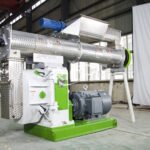
The pellet mill forms the prepared material into compact pellets by forcing it through a die. The fresh pellets then enter the cooling section before screening and storage.
What Happens After Pelletizing?
Fresh pellets leave the pelletizing chamber at an elevated temperature. They can also contain residual moisture.
A cooler lowers the pellet temperature and helps stabilize the product. Screening then removes fines and oversized material.
Fines do not necessarily have to become waste. In a properly designed production line, they can often be returned to the pelletizing process.
After screening, finished pellets can be transported to storage or sent to an automatic packing machine.
Choosing Equipment for Different Straw Types
Not all straw behaves in exactly the same way.
Wheat straw, rice straw, corn stalks, and other agricultural residues can differ in fiber length, moisture, ash content, and bulk density.
Therefore, equipment selection should consider the actual raw material rather than using the word “straw” as the only specification.
For example, a corn stalk pellet machine for biomass fuel may require a particular preparation configuration because long corn stalks can require effective crushing before pelletizing.
The same principle applies to wheat and rice straw. Raw material testing helps determine whether additional crushing, drying, or feeding equipment is required.
Small Farm or Commercial Fuel Production?
The appropriate production system depends on the amount of straw available.
A small farm may process its own residues and use the pellets locally. Such a project can use a relatively compact configuration with simpler feeding and packing.
A commercial producer may collect straw from multiple farms and operate a larger continuous production line. This type of project normally requires larger storage areas, automatic conveying, dust control, and more advanced electrical control.
The available raw material supply should always be calculated before selecting the production capacity.
Key Factors for a Straw Pellet Project
Before investing in equipment, buyers should determine:
- What type of straw is available?
- How much straw is available per day?
- What is the average moisture content?
- What pellet diameter is required?
- Will the pellets be used internally or sold?
- Is drying necessary?
- What level of automation is practical?
These answers provide the basis for selecting the equipment configuration.
RICHI can design biomass pellet production systems according to the raw material, required output, and final application. A complete pellet plant can combine crushing, drying, pelletizing, cooling, screening, conveying, and packing equipment into one coordinated system.
For agricultural businesses with a reliable supply of straw, pelletizing can turn seasonal residues into a more manageable and potentially valuable biomass fuel. Read more about straw and other biomass pellet production solutions before selecting the final equipment configuration.
Related Post: https://pelletizerequipment.com/efb-pellet-machine/