


In the competitive world of poultry production, margins are measured in pennies per bird. With feed costs consuming roughly 70% of total operating expenses, producers continuously seek advantages in nutrition, genetics, and management. Yet one critical factor often receives far less attention than it deserves: the physical durability of the feed itself. The journey from feed mill to feeder pan exposes pellets to a gauntlet of mechanical stresses—conveying, augering, dropping, and handling—that can transform high-quality pellets into useless dust. Understanding the science of pellet durability is not merely a technical exercise; it is a direct pathway to improved feed efficiency, better flock health, and enhanced profitability.
Related Post: https://pelletizerextruder.com/about-us/
The Cost of Crumbling: What Poor Durability Really Means
When pellets break down into fines and dust, the consequences cascade through every aspect of poultry production. The most immediate impact is feed wastage. Poultry feeding systems, particularly automated chain and auger systems common in commercial operations, are engineered for uniform, free-flowing pellets. Fines accumulate in feeder troughs, attract moisture, promote mold growth, and ultimately must be discarded. Research indicates that poor pellet durability can increase feed wastage by 3-5%, representing a direct financial loss that compounds with every batch produced.
Nutritional uniformity suffers equally. During transport and handling, fines separate from intact pellets due to differences in particle size and density. This segregation means that birds may not receive a consistent diet—some consume nutrient-rich fines while others receive less fortified pellets. The result is uneven growth rates, variable feed conversion, and reduced flock uniformity at processing. For broiler operations, this translates to more birds falling outside target weight ranges, complicating processing schedules and reducing premium pricing opportunities.
The economic burden extends to poultry house environment and bird health. Excessive fines generate dust that irritates respiratory systems, predisposing birds to conditions like ascites and airsacculitis. Dust also degrades litter quality, increases ammonia emissions, and creates conditions favorable for pathogen proliferation. Veterinary costs rise, performance declines, and mortality may increase—all traceable to feed that could not withstand the rigors of handling.
The Science of Pellet Durability: What Makes a Pellet Survive
Pellet durability is not a single property but a composite of several physical characteristics. The Pellet Durability Index (PDI) serves as the industry standard measure, quantifying the percentage of pellets that remain intact after exposure to standardized tumbling and handling stresses. Commercial poultry operations typically target PDI values above 95%, though achieving this requires careful attention to multiple processing variables.
The compression ratio of the die—the ratio of hole length to diameter—is the primary determinant of pellet density and hardness. Higher compression ratios produce denser, more durable pellets but reduce throughput and increase energy consumption. Lower ratios yield softer pellets that break more easily. The optimal ratio depends on diet composition: high-fat diets require higher compression to achieve adequate durability, while high-fiber diets may need lower ratios to prevent excessive die wear.
Conditioning, the application of steam and heat to the mash before pelleting, is equally critical. Proper conditioning gelatinizes starches and activates natural binders within the feed. Insufficient conditioning yields weak pellets, while excessive conditioning over-gelatinizes starches, creating pellets that are hard but brittle—prone to shattering rather than wearing gradually. The sweet spot typically occurs at mash temperatures of 80-85°C and moisture content of 15-17%, though these parameters vary with diet formulation.
The particle size of the ground mash influences how well particles bond during pelleting. Uniformly ground materials with consistent particle size distribution produce stronger pellets with fewer voids and weak points. Grinding too fine reduces throughput and may create dust issues; grinding too coarse compromises particle bonding and pellet integrity.
Equipment Considerations for Durable Pellet Production
Producing consistently durable pellets requires equipment engineered for precision and reliability. The pelleting press itself must deliver consistent compression across varying feed formulations, maintaining die temperature and roller pressure within narrow operating ranges. Variations in die temperature, often caused by inconsistent feed rates or conditioning, can produce pellets with variable density and durability.
The die itself is a critical determinant of pellet quality. Premium dies use specialized alloy steels with controlled hardness profiles—hard enough to resist abrasive wear yet tough enough to withstand the cyclic stresses of continuous operation. The surface finish of the die holes affects pellet release and surface quality, with smoother finishes generally producing more durable pellets with fewer cracks and surface defects.
Roller adjustment and wear patterns also influence pellet quality. Rollers that are improperly adjusted or unevenly worn produce inconsistent compression, resulting in variable pellet density and increased fines generation. Regular inspection and maintenance of rollers, along with scheduled die replacement, are essential for maintaining consistent pellet durability.
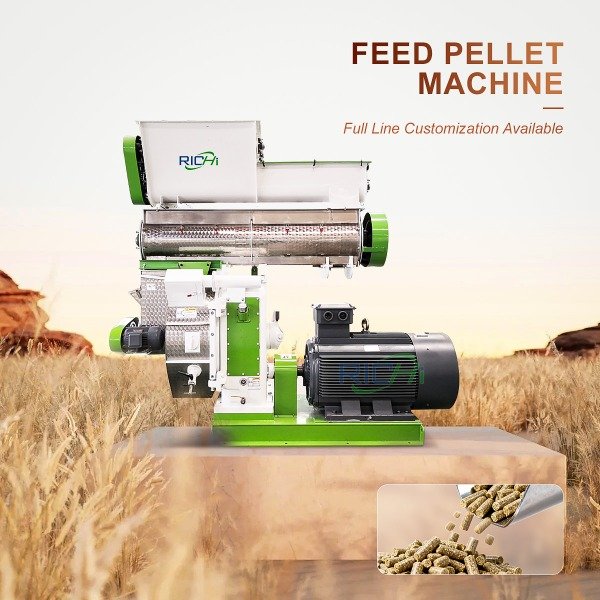
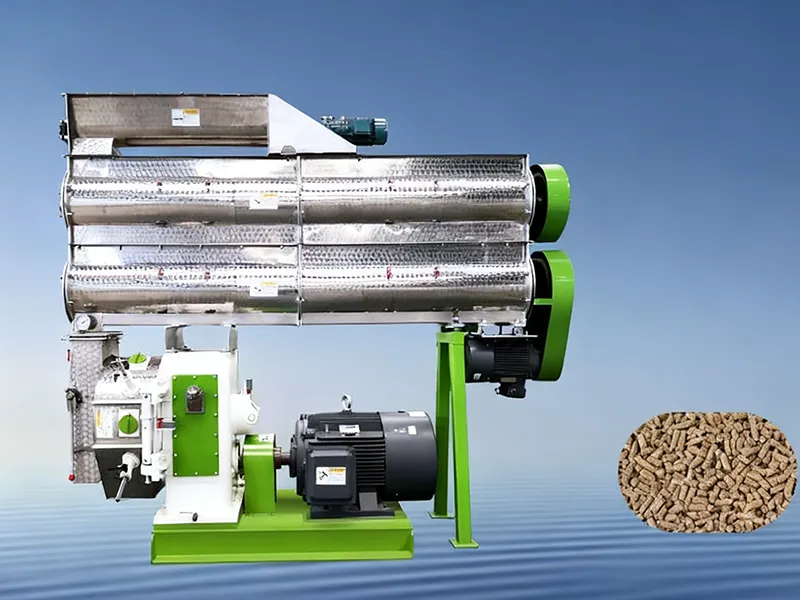
A well-designed poultry feed pellet making machine incorporates features that support consistent durability across production runs. Variable-frequency drives allow precise control of feed rate and die speed, adapting to different formulations without sacrificing pellet quality. Advanced conditioning systems with precise temperature and moisture control ensure consistent starch gelatinization and binder activation. Quick-change die systems reduce downtime during formulation transitions, allowing producers to maintain production schedules while responding to changing bird requirements.
The Role of Ingredient Formulation in Pellet Quality
While equipment design establishes the foundation for pellet durability, ingredient selection and formulation play equally important roles. Different ingredients contribute differently to pellet binding and structural integrity. Grains vary in their starch gelatinization characteristics, with wheat generally producing stronger pellets than corn due to its higher protein content and different starch properties. Protein meals contribute to binding through their natural adhesive properties when heated and compressed.
Fats and oils, while essential for energy density, can reduce pellet durability by lubricating the die and interfering with particle bonding. Producers often address this by applying a portion of the fat after pelleting—as a top-dress coating—rather than incorporating it entirely into the mash. This approach maintains pellet integrity while delivering the required energy density.
Fiber content influences durability in complex ways. Moderate fiber levels can improve pellet binding by providing structural matrix, while excessive fiber may interfere with particle bonding and reduce pellet strength. The source and physical form of fiber matter: finely ground fibrous ingredients generally integrate better into pellets than coarse fiber particles that create weak points.
Beyond the Press: Post-Pelleting Considerations
Pellet durability is determined not only during the pelleting process but also in the cooling and handling stages that follow. Hot pellets emerging from the press are soft and vulnerable to damage. Cooling must be gradual and uniform—rapid cooling creates thermal stress that causes cracking, while inadequate cooling leaves pellets soft and susceptible to deformation during handling.
The cooler design and operation significantly influence final pellet quality. Counterflow coolers, which move ambient air upward through the pellet bed, generally provide more uniform cooling than horizontal or crossflow designs. Proper air distribution and retention time ensure that pellets reach stable temperature and moisture content without thermal shock or surface cracking.
Screening after cooling removes fines and undersized pellets that would otherwise contaminate the finished product. Effective screening reduces dust generation during handling and ensures that birds receive uniformly sized pellets that support consistent intake and digestion.
Evaluating Pellet Quality: Methods and Metrics
Producers have several options for evaluating pellet durability, ranging from simple on-farm tests to sophisticated laboratory analysis. The tumbling box method, standardized as ASAE S269.4, provides a reliable measure of pellet durability by subjecting a sample to controlled tumbling followed by screening and weighing. Commercial operations often perform regular in-house testing to monitor production consistency and identify quality deviations early.
Visual inspection, while subjective, provides immediate feedback on pellet quality. Pellets that appear uniformly sized with smooth surfaces and few cracks typically exhibit good durability. Excessive fines in the bulk sample, rough surfaces, or irregular shapes suggest processing issues that warrant investigation.
The Investment Case for Quality Equipment
The decision to invest in premium feed processing equipment involves evaluating both initial capital costs and long-term operating economics. Higher-quality equipment typically commands a higher purchase price but delivers lower total cost of ownership through reduced energy consumption, less frequent maintenance, longer component life, and—crucially—more consistent pellet quality that reduces feed wastage and improves bird performance.
Producers should evaluate the full lifecycle economics, including the value of reduced fines generation, improved flock uniformity, and better feed conversion. These operational benefits accumulate over the equipment’s lifespan, often exceeding the initial price difference between premium and economy equipment.
When evaluating potential equipment partners, producers look for manufacturers with proven expertise in poultry feed processing and comprehensive after-sales support. RICHI Machinery has established itself as a trusted partner in this sector, with over 30 years of focused research and development and a global footprint spanning more than 140 countries. Their SZLH series, covering capacities from 2 to over 10 tons per hour, incorporates engineering innovations specifically designed for poultry feed production, including gear-driven transmissions for efficiency and durability, stainless steel conditioners for corrosion resistance, and advanced control systems for consistent pellet quality.
Making Pellet Durability a Strategic Priority
Pellet durability is not a technical footnote but a strategic variable that influences feed costs, bird performance, and operational efficiency. Producers who prioritize durability in their equipment selection and processing practices position themselves to capture the economic benefits that flow from consistent, high-quality feed. The science is well understood, the technology is proven, and the returns are measurable.
For operations ready to elevate their feed quality and production economics, investing in equipment that delivers consistent pellet durability is one of the highest-return decisions available in modern poultry production.