


The global aquaculture industry has experienced remarkable growth over the past decades and has become one of the most important sources of aquatic products worldwide. With increasing population, rising seafood consumption, and growing pressure on natural fisheries, aquaculture plays a critical role in meeting global food demand. However, the sustainable development of aquaculture depends on many factors, and high-quality fish feed is one of the most important.
Feed directly influences fish growth rate, health condition, production efficiency, and farming profitability. As aquaculture systems become more intensive, traditional feed processing methods are often unable to meet the increasingly strict requirements for feed quality, digestibility, and environmental performance. This has created a strong demand for advanced feed manufacturing technologies.
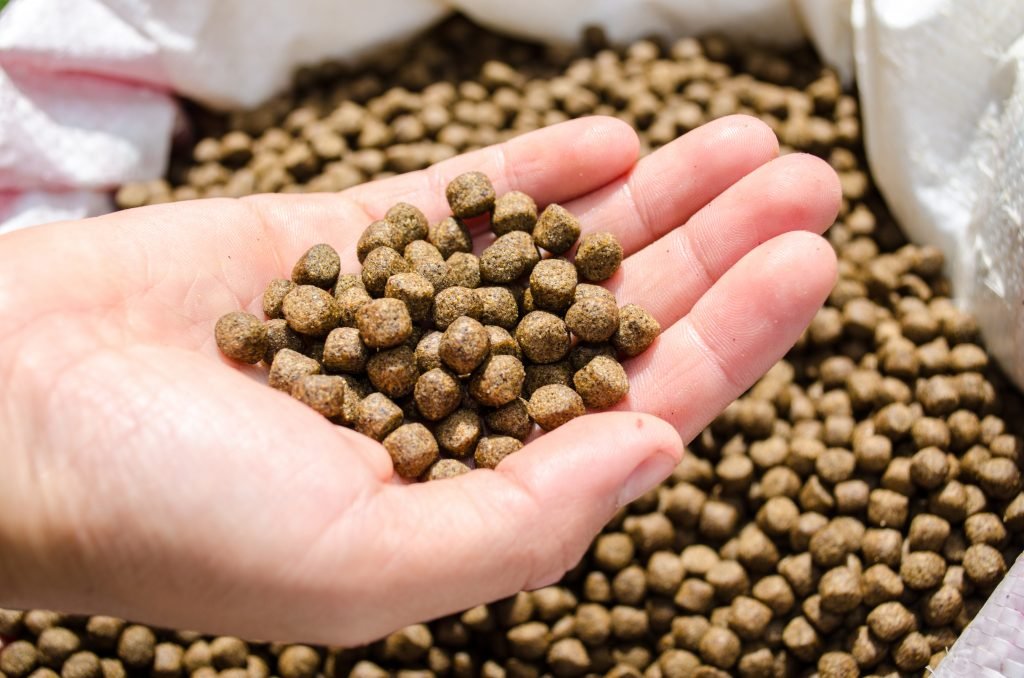
Fish feed extrusion technology has become a key innovation supporting modern aquaculture growth. Through the combination of heat, moisture, pressure, and mechanical shear, extrusion transforms raw materials into highly digestible, stable, and nutritionally balanced feed pellets. It enables manufacturers to produce different types of aquatic feed, including floating feed, slow-sinking feed, and sinking feed, according to the needs of different fish species.
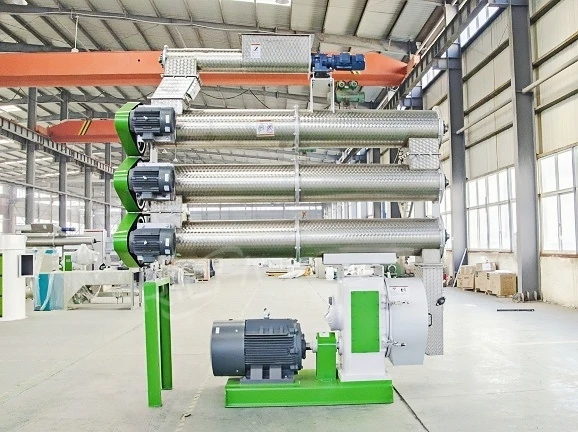
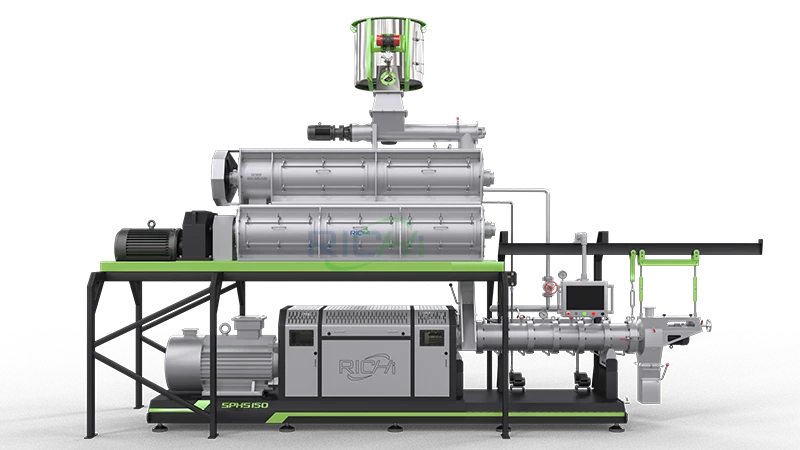
A professional floating fish feed extruder is one of the most important equipment solutions in modern aquafeed production. It helps manufacturers produce floating pellets with excellent expansion, water stability, and nutrient availability, allowing fish farmers to improve feeding efficiency and reduce production waste.
By improving feed quality, supporting sustainable farming practices, and increasing production efficiency, fish feed extrusion technology has become an essential driver of global aquaculture development.
The Importance of High-Quality Feed in Aquaculture Growth
Feed is the foundation of successful aquaculture production. Unlike natural aquatic ecosystems where fish obtain nutrients from various sources, farmed fish rely heavily on manufactured feed to meet their nutritional requirements.
A high-quality fish feed should provide:
- Balanced protein and energy
- High nutrient digestibility
- Good palatability
- Appropriate pellet size
- Strong water stability
- Low nutrient loss
Poor-quality feed can create many challenges for fish farmers, including slow growth, poor feed conversion, increased farming costs, and water pollution.
In intensive aquaculture systems, feed efficiency directly affects profitability. Farmers need feed products that allow fish to absorb more nutrients while minimizing waste. Fish feed extrusion technology provides an effective solution by improving the physical and nutritional properties of feed pellets.
What Is Fish Feed Extrusion Technology?
Fish feed extrusion is an advanced processing technology that uses mechanical and thermal energy to convert mixed ingredients into stable aquatic feed pellets.
During extrusion, prepared raw materials enter an extrusion chamber where they are exposed to:
- High temperature
- High pressure
- Moisture
- Mechanical shear
Inside the extruder, rotating screws transport and compress the material. Heat and pressure cause physical and chemical changes in the ingredients, including starch gelatinization and protein modification.
When the processed material exits through the die, the sudden pressure release causes moisture evaporation and pellet expansion. This creates a porous internal structure that influences pellet density, buoyancy, and digestibility.
Compared with traditional pelletizing, extrusion provides better control over:
- Pellet structure
- Floating performance
- Water stability
- Nutrient availability
- Feed quality consistency
These advantages make extrusion technology an important foundation for modern aquaculture feed production.
How Fish Feed Extrusion Technology Promotes Aquaculture Growth
1. Improving Nutrient Digestibility and Fish Growth Performance
One of the biggest contributions of extrusion technology to aquaculture growth is improved nutrient utilization.
Many feed ingredients contain nutrients that are not easily absorbed by fish. For example, plant-based ingredients may contain complex structures or anti-nutritional factors that reduce digestibility.
During extrusion, heat and moisture modify these ingredients and improve their nutritional availability.
Starch Gelatinization
Starch is commonly used in fish feed formulas because it provides energy and helps bind pellets.
Extrusion causes starch granules to absorb water and gelatinize, resulting in:
- Better carbohydrate digestion
- Stronger pellet structure
- Improved energy utilization
Protein Improvement
Extrusion also improves protein utilization by changing protein structures and reducing certain anti-nutritional factors.
As a result, fish can absorb nutrients more efficiently, leading to:
- Faster growth
- Better feed conversion ratio
- Reduced feed costs
Improved nutrient utilization allows aquaculture producers to achieve higher productivity with fewer resources.
2. Supporting Efficient Floating Feed Production
Floating feed has become increasingly popular in modern fish farming because it provides better feeding control and management efficiency.
Unlike sinking feed, floating pellets remain visible on the water surface, allowing farmers to monitor fish feeding behavior and adjust feeding amounts.
The production of high-quality floating feed requires precise control of pellet density and expansion. This is where a floating fish feed extruder plays a critical role.
https://richipelletizer.com/floating-fish-feed-extruder-machine
During extrusion, the combination of temperature, moisture, and pressure creates internal air spaces inside the pellets. These air pockets reduce pellet density and allow feed to float.
A high-performance floating fish feed extruder provides several benefits:
- Stable pellet expansion
- Consistent floating time
- Better feed appearance
- Improved nutrient retention
For commercial aquaculture farms, floating feed improves feeding management and reduces unnecessary feed loss.
3. Reducing Feed Waste and Improving Farming Efficiency
Feed waste is one of the major challenges affecting aquaculture profitability and environmental sustainability.
When feed pellets dissolve quickly in water, nutrients are released before fish can consume them. This increases operating costs and negatively affects water quality.
Extruded feed helps solve this problem through improved water stability.
The extrusion process creates a strong pellet structure by:
- Enhancing starch binding
- Improving pellet hardness
- Reducing nutrient leakage
As a result, fish can consume more of the provided feed, improving feed utilization efficiency.
Reduced feed waste contributes to:
- Lower production costs
- Cleaner farming environments
- Better resource utilization
4. Improving Water Quality in Aquaculture Systems
Water quality is essential for successful fish farming. Excess feed particles and nutrient leakage can increase organic pollution and affect fish health.
Extruded feed supports better water management because it remains stable in water for longer periods.
Benefits include:
- Lower nutrient release
- Reduced organic waste accumulation
- Improved pond and tank conditions
For intensive aquaculture systems, maintaining stable water quality is especially important because high stocking densities increase environmental pressure.
By improving feed stability, extrusion technology helps farmers create healthier farming environments.
5. Producing Customized Feed for Different Aquatic Species
Different fish species have different nutritional requirements and feeding behaviors. A feed solution suitable for one species may not be ideal for another.
Extrusion technology provides excellent flexibility for producing customized feed products.
Manufacturers can adjust:
- Pellet size
- Density
- Nutritional formula
- Processing parameters
This allows production of feed for:
- Tilapia
- Carp
- Catfish
- Salmon
- Trout
- Shrimp
- Ornamental fish
For example, floating feed is suitable for species that feed near the water surface, while sinking feed may be more appropriate for bottom-feeding species.
This flexibility helps aquaculture businesses meet diverse market demands.
6. Supporting the Use of Alternative Feed Ingredients
The sustainable development of aquaculture requires reducing dependence on limited resources and increasing the use of alternative ingredients.
Extrusion technology makes it easier to process various raw materials, including:
- Soybean meal
- Wheat
- Corn
- Rice bran
- Plant protein sources
- Alternative animal proteins
Some alternative ingredients may have lower digestibility or poorer processing characteristics. Extrusion improves their functional properties and allows them to be incorporated into high-quality feed formulas.
This supports the development of more sustainable aquaculture feed systems.
7. Enhancing Feed Safety and Storage Stability
Feed safety is another important factor supporting aquaculture growth.
Raw materials may contain microorganisms, molds, or other contaminants. During extrusion, high temperatures help reduce microbial risks and improve feed hygiene.
Extruded feed also offers better storage performance because of:
- Lower moisture content after drying
- Stronger pellet structure
- Improved durability
Longer storage stability reduces product losses and improves supply chain efficiency.
8. Increasing Commercial Aquafeed Production Efficiency
As aquaculture expands, commercial feed manufacturers require production systems capable of producing large quantities of consistent feed.
Modern extrusion technology improves manufacturing efficiency through:
- Continuous production
- Automated control
- Stable operation
- Reduced labor requirements
A complete extrusion-based fish feed production line typically includes:
- Grinding system
- Mixing system
- Conditioning system
- Extrusion system
- Drying system
- Cooling system
- Packaging system
These integrated systems allow manufacturers to produce high-quality feed at industrial scale.
(Related machine: industrial aqua feed plant)
9. Improving Economic Benefits for Fish Farmers
The ultimate goal of feed technology development is to improve economic returns for aquaculture businesses.
Extrusion technology supports profitability by:
- Improving feed conversion ratio
- Reducing feed waste
- Increasing fish growth rate
- Improving production stability
When fish utilize feed nutrients more efficiently, farmers can achieve higher output with lower input costs.
This economic advantage encourages more investment in modern aquaculture production.
10. The Role of Advanced Floating Fish Feed Extruders in Aquaculture Development
The development of advanced extrusion equipment has further strengthened the role of feed technology in aquaculture growth.
A modern floating fish feed extruder provides precise control over key processing factors, including:
- Temperature
- Moisture
- Pressure
- Screw speed
- Die design
These controls allow manufacturers to produce feed with consistent quality and performance.
Advanced extruders also offer:
- Higher production efficiency
- Lower energy consumption
- Easier operation
- Better adaptability to different formulas
For large-scale aquafeed pellet plants, selecting reliable extrusion equipment is essential for maintaining competitive production.
Future Trends of Fish Feed Extrusion Technology
As aquaculture continues to expand, fish feed extrusion technology will continue to develop toward higher efficiency, automation, and sustainability.
Future trends include:
Intelligent Production Systems
Advanced control technologies will allow automatic monitoring and adjustment of extrusion parameters.
Sustainable Feed Development
Extrusion will support the wider use of alternative proteins and environmentally friendly ingredients.
Energy-Efficient Equipment
New-generation extruders will focus on reducing energy consumption and improving production efficiency.
Customized Feed Solutions
More precise extrusion control will allow manufacturers to create specialized feed products for different species and farming conditions.
These developments will further strengthen the role of extrusion technology in global aquaculture growth.
Conclusion
Fish feed extrusion technology has become a fundamental technology supporting the development of modern aquaculture. By improving nutrient digestibility, enhancing feed stability, reducing waste, and enabling customized feed production, extrusion helps farmers achieve higher productivity and more sustainable operations.
A reliable floating fish feed extruder provides the advanced processing capability needed to produce high-quality floating feed with excellent expansion, buoyancy, and nutritional performance. Through precise control of temperature, moisture, pressure, and mechanical processing, it allows feed manufacturers to meet the growing demands of the aquaculture industry.
As global demand for aquatic products continues to rise, advanced fish feed extrusion technology will remain an important driver of aquaculture growth, helping producers improve efficiency, reduce environmental impact, and build a more sustainable future for fish farming.