

Aquaculture is no longer limited to small ponds managed by individual farmers. Across many regions, production has become more organized, with larger farms, specialized hatcheries, recirculating systems, offshore operations, and commercial feed suppliers serving increasingly diverse markets.
As production methods change, feed production is changing with them.
Feed is one of the most important operating inputs in aquaculture, and its cost can have a major influence on the economics of a farming project. The right feed must deliver appropriate nutrition while also having physical characteristics that suit the species, farming system, and feeding method.
This is why modern aquaculture businesses are paying more attention to how feed is formulated, processed, stored, and delivered.
The discussion is also becoming broader than traditional fish farming. Tilapia, carp, catfish, salmon, trout, shrimp, crab, and other aquatic species can have very different nutritional and physical feed requirements.
For feed manufacturers, this creates both challenges and opportunities.
Aquaculture Is Becoming More Diverse
One of the biggest changes in the industry is the growing diversity of cultured species.
A feed plant may serve several markets instead of producing one standardized product.
A freshwater farm may focus on tilapia or carp. Another customer may raise catfish. Coastal operations may produce shrimp, marine fish, or crab. Hatcheries may require much smaller feed particles than grow-out farms.
These differences influence the feed manufacturing process.
A feed suitable for one species may not be appropriate for another. The nutritional formula, pellet size, sinking behavior, water stability, hardness, and feeding rate may all need to change.
Therefore, modern feed factories need more flexibility than a plant designed around a single product.
This does not necessarily mean that every factory needs highly complicated equipment. Instead, the production system should be designed around the number of products, production volume, and expected frequency of formula changes.
Why Does Feed Cost Matter So Much?
Feed represents a major operating cost in aquaculture.
Farmers therefore look beyond the purchase price of feed. They are also concerned about how efficiently the animals use it, how much feed is lost in the water, and whether the physical quality remains stable during feeding.
A cheap feed is not necessarily an economical feed if a large proportion is wasted.
Similarly, a more expensive feed may make economic sense if it provides better nutrient delivery and reduces unnecessary losses.
This makes feed quality and feed utilization important parts of farm management.
For feed manufacturers, the challenge is to produce a product that meets nutritional requirements while controlling raw material and processing costs.
The Formula Is More Than a List of Ingredients
Feed formulation is often discussed in terms of protein, fat, carbohydrates, minerals, vitamins, and other nutrients.
However, processing characteristics also matter.
Two formulas with similar nutritional values may behave differently during manufacturing because their starch, fiber, moisture, and ingredient structures are different.
Some ingredients may absorb more water. Others may affect expansion or pellet durability.
Plant-based ingredients are also receiving more attention as the aquaculture industry looks for alternatives to traditional marine ingredients. Research has examined various agricultural and agro-industrial ingredients as potential protein sources or fishmeal substitutes.
This means feed manufacturers increasingly need to understand both nutrition and processing.
A formula that looks good in a spreadsheet still needs to perform properly on the production line.
Why Are Alternative Ingredients Becoming Important?
The aquaculture industry has been exploring alternatives to reduce dependence on fishmeal and fish oil.
Potential ingredients include plant proteins, agricultural by-products, algae-based materials, insect-derived ingredients, and other emerging protein sources.
The goal is not simply to replace one ingredient with another.
A replacement ingredient needs to provide appropriate nutritional characteristics and remain practical from a processing and cost perspective.
Some alternative materials also contain compounds that require thermal treatment or careful formulation.
Extrusion can be useful in this context because the process combines heat, moisture, pressure, and mechanical energy. Research has shown that extrusion can influence digestibility and certain functional properties of aquaculture feed while also helping process some plant-based ingredients.
As alternative ingredients become more common, processing flexibility may become increasingly valuable.
Floating, Sinking, or Slow-Sinking?
Not every aquatic animal requires floating feed.
This is an important point when discussing aquaculture feed equipment.
Feed can be designed to float, sink quickly, or sink more slowly depending on the species and feeding environment.
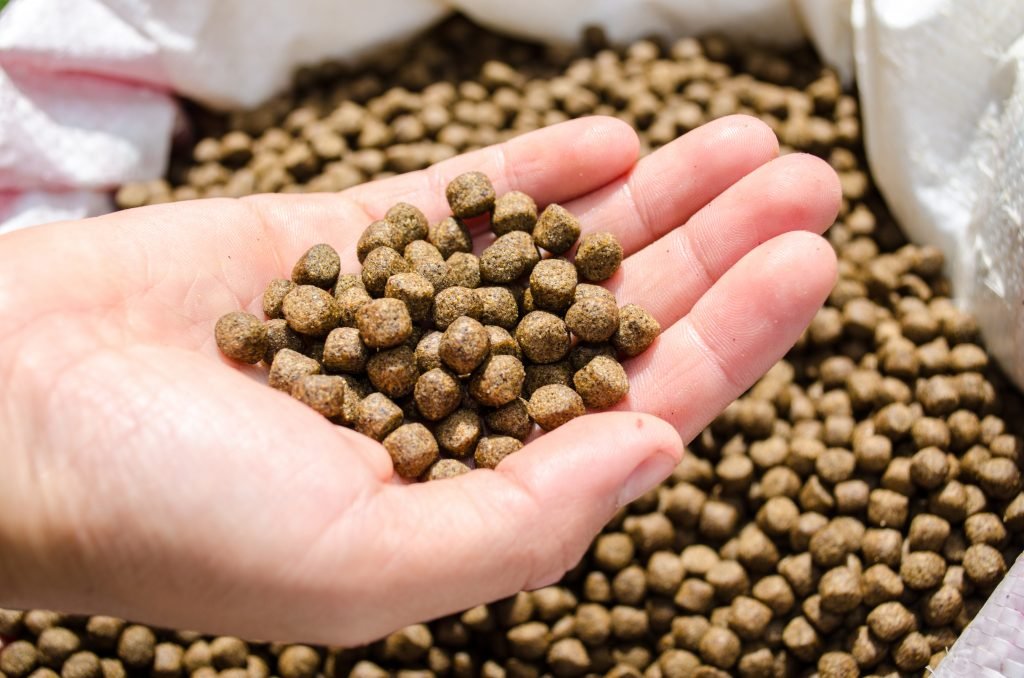
Tilapia, carp, and catfish are examples of species commonly associated with floating feed, while other species may require different buoyancy characteristics. Shrimp and some bottom-feeding aquatic animals may require sinking feed.
The farming environment also matters.
In a clear pond, floating feed may make it easier for farmers to observe feeding activity. In another production system, sinking feed may be more appropriate.
Therefore, feed processing should start with the biological and operational requirements rather than the machine itself.
Where Does Extrusion Fit Into Aquaculture?
Extrusion has become an important processing technology in aquafeed manufacturing because it allows producers to control several physical characteristics of the finished product.
During extrusion, the feed mixture is subjected to heat, moisture, pressure, and mechanical energy.
As the material leaves the die, the pressure changes rapidly. Under suitable conditions, moisture expansion can create a porous structure and reduce the density of the finished product.
This makes extrusion useful for producing floating feed, although the final result depends on the formula and processing conditions. Extrusion can also be used for other aquatic feed characteristics rather than simply producing floating pellets.
Modern extrusion systems can therefore provide more flexibility than simply pressing ingredients into compact pellets.
Why Does Equipment Price Vary So Much?
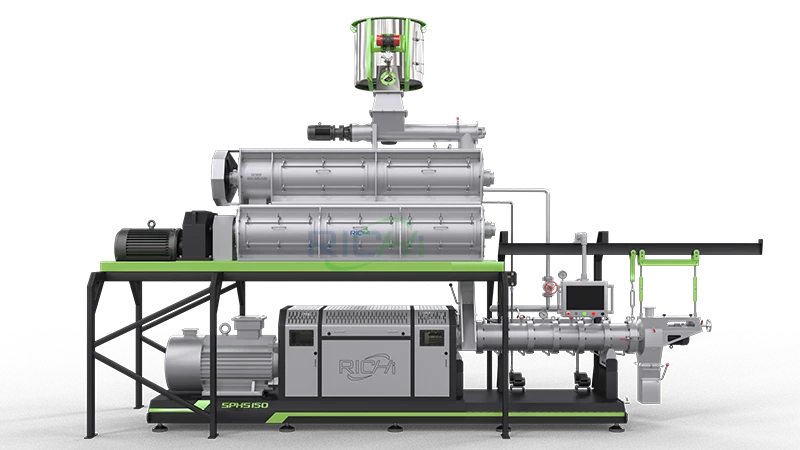
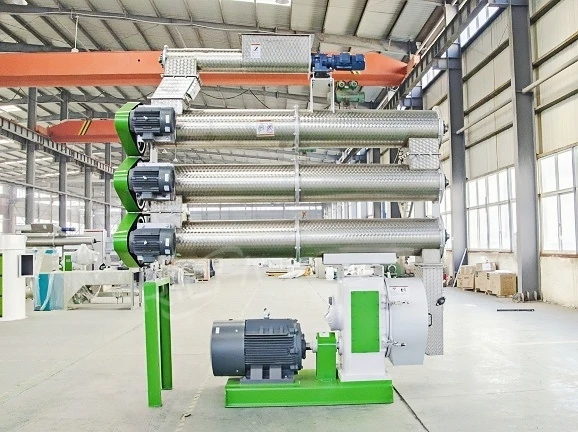
When investors search for fish feed extruder machine price, they may find a very wide range of quotations.
This is normal because an extruder is not a single standardized machine.
Prices can vary according to production capacity, motor power, screw configuration, conditioning system, automation level, material construction, die configuration, auxiliary equipment, and the overall production-line design.
A small machine for a farm-scale project is obviously different from a continuous industrial system.
The price can also change depending on whether the buyer needs only the extruder or a complete line.
A complete project may include:
- Raw material cleaning
- Grinding
- Batching
- Mixing
- Conditioning
- Extrusion
- Drying
- Cooling
- Screening
- Conveying
- Packaging
- Electrical control
Therefore, comparing two prices without checking what is included can produce a misleading result.
The cheapest quotation is not automatically the lowest-cost solution.
Should Buyers Purchase the Cheapest Extruder?
Price is important, but it should not be the only purchasing criterion.
A machine that costs less initially may have limitations in capacity, flexibility, wear resistance, automation, or after-sales support.
These differences can become more important after several years of operation.
For example, if a feed factory needs to change pellet sizes frequently, equipment that allows easier adjustment may save production time.
If the plant operates for long hours every day, motor efficiency and wear-part life can have a greater impact on operating costs.
A better purchasing approach is to compare the total cost of ownership.
This includes the purchase price, installation, electricity, maintenance, spare parts, labor, downtime, and expected service life. visit site: https://pelletmakermachine.com/floating-fish-feed-extruder-machine/
What Does a Complete Feed Line Need?
An aquaculture feed plant usually contains several connected processes.
The first stage is raw material preparation.
Ingredients are received, cleaned, stored, and ground where necessary.
The next stage is batching and mixing. Accurate weighing is important because the formula determines the nutritional characteristics of the finished product.
The prepared mixture then enters conditioning and extrusion.
After extrusion, the product may require drying, cooling, and screening before packaging.
The exact configuration depends on the product.
A plant producing dry floating feed may need a different downstream arrangement from one producing a specialized sinking product.
This is why equipment selection should begin with the final product specification.
Why Is Water Stability Important?
Feed does not exist in a dry environment once it reaches the farm.
It interacts with water almost immediately.
If a pellet breaks down too quickly, nutrients can disperse into the water before the animal consumes them.
This can reduce feed utilization and potentially contribute to water-quality problems.
Feed durability and water stability are therefore important characteristics in aquaculture.
Research and industry literature have identified water stability, buoyancy, and other physical properties as important considerations in extruded aquafeed production.
The required level of water stability varies by species and feeding method.
Again, there is no single ideal pellet for every aquaculture operation.
How Does Recirculating Aquaculture Change Feed Requirements?
Recirculating aquaculture systems, or RAS, create a different production environment from conventional ponds.
Water is continuously treated and reused.
Because the system is highly controlled, uneaten feed and waste can have a significant influence on water management.
This makes feed efficiency and physical stability especially important.
A pellet that produces excessive fines or breaks down rapidly can create additional solids and nutrient loads in the system.
For RAS operators, feed selection therefore becomes part of overall system management.
The same principle applies to other intensive farming systems.
As aquaculture becomes more controlled, feed manufacturers need to consider not only nutrition but also the interaction between feed and the production environment.
What About Shrimp and Crab Feed?
Expanding the discussion beyond fish reveals another important point: aquatic feed processing is not one single market.
Shrimp feed, crab feed, marine fish feed, and freshwater fish feed can have different requirements.
Shrimp, for example, generally require sinking feed rather than floating pellets.
Pellet water stability can be particularly important because the feed needs to remain available in the culture environment long enough for the animals to consume it.
The formula and processing conditions can therefore be adjusted to produce different physical properties.
Extrusion has also been studied for shrimp feed, with research focusing on the relationship between formulation, extrusion conditions, and physical pellet quality.
This creates opportunities for feed producers that want to serve several aquaculture sectors with one flexible production facility.
How Can Feed Factories Serve Multiple Markets?
A diversified feed manufacturer may produce several product categories on the same site.
For example, one factory could manufacture:
- Floating feed for freshwater fish
- Sinking feed for shrimp
- Specialized marine fish feed
- Juvenile feed
- Grow-out feed
- High-energy formulations
- Region-specific products
The challenge is managing product changes efficiently.
Different formulas may require different moisture levels, processing conditions, pellet diameters, and drying settings.
Production planning becomes important.
Similar products can be scheduled together to reduce cleaning and adjustment time.
The factory can also use appropriate dies and operating settings for each product group.
Is a Flexible Production Line Better?
For a company serving only one large customer with a standardized product, maximum flexibility may not be necessary.
A specialized production line can sometimes be simpler and more efficient.
However, flexibility becomes valuable when the market is diverse.
A feed manufacturer may not know exactly which products customers will demand several years from now.
The ability to adjust pellet size, density, formula, and processing conditions can therefore provide commercial advantages.
Modern aquafeed extrusion research is increasingly focused on process control, ingredient variability, product diversity, and more advanced methods of characterizing extrusion results.
This suggests that future feed plants may place more emphasis on controllability rather than simply maximum output.
How Important Is Energy Consumption?
Energy is another factor that should be considered when comparing equipment.
Grinding requires electricity. Extrusion uses mechanical energy and may require steam or other heating methods. Drying can also become a significant energy consumer.
A production line should therefore be evaluated as a complete energy system.
Improving one machine does not necessarily reduce total energy consumption if another process becomes a bottleneck.
For example, producing wet extrudate at a high rate is not useful if the dryer needs to operate far beyond its efficient range.
Process integration can help reduce unnecessary energy use.
The goal is to achieve the required feed quality and output without adding unnecessary processing steps or oversized equipment.
What Should a New Aquaculture Feed Factory Plan First?
A new factory should begin with the market rather than the machinery.
First, identify the target customers.
Are they freshwater farms, shrimp farms, marine fish producers, hatcheries, distributors, or integrated aquaculture companies?
Next, identify the products they actually need.
Then determine the expected annual production volume and peak demand.
Only after these questions are answered should the equipment configuration be developed.
The factory layout should also leave reasonable room for maintenance and future expansion.
Raw material storage, finished product storage, utility areas, laboratories, offices, and transportation routes all need to be considered.
A good feed plant is not simply a collection of machines placed inside a building.
It is a production system designed around a specific business model.
What Role Does a Modern Pellet Maker Play?
Although extrusion is increasingly important in aquafeed processing, conventional pelleting still has its place.
The appropriate process depends on the species, formula, pellet characteristics, and production objectives.
A pellet maker can be suitable for applications where dense pellets are preferred and expansion is not the primary objective.
Extrusion provides greater control over expansion and can produce a wider range of physical characteristics, but it may involve higher processing costs and more complex process control.
Therefore, feed producers should not ask which technology is universally better.
The better question is which processing method matches the product they need to manufacture.
How Can Technology Support More Sustainable Aquaculture?
Sustainability in aquaculture is closely connected to feed.
Better feed utilization can reduce wasted nutrients and improve production efficiency.
The industry is also investigating alternative ingredients that can reduce dependence on marine resources.
At the same time, feed manufacturers are working to improve water stability, digestibility, and nutrient delivery.
These improvements can have effects beyond the feed factory.
If animals use nutrients more efficiently, farmers may need less feed to achieve a particular production result.
If pellets remain stable for an appropriate period, less material may be lost in the culture environment.
This is why feed processing technology should be considered part of the broader aquaculture system rather than an isolated manufacturing process.
What Will Future Aquaculture Feed Plants Look Like?
Future feed plants are likely to become more flexible and data-driven.
Instead of producing one standardized pellet, manufacturers may produce more specialized products for different species, farming systems, and growth stages.
Automation can help monitor ingredient dosing and production conditions.
Better process control may also help operators respond to changes in raw material properties.
Artificial intelligence and predictive process control are already being discussed as potential directions for aquafeed extrusion research.
However, technology alone will not solve every problem.
A well-designed formula, stable raw materials, appropriate equipment, trained operators, and effective quality control will remain fundamental.
Final Thoughts
Aquaculture is becoming more diverse, intensive, and technologically controlled.
That development is creating new requirements for feed manufacturers.
Fish, shrimp, crab, and other aquatic species do not all need the same feed. Even within one species, feed requirements can change according to growth stage and farming system.
As a result, modern feed production needs to balance nutrition, physical quality, processing efficiency, and cost.
When evaluating fish feed extruder machine price, buyers should therefore look beyond the machine quotation. The more useful comparison considers capacity, formula compatibility, energy consumption, auxiliary equipment, maintenance, flexibility, and long-term operating costs.
The right processing technology depends on the product.
Some businesses may benefit from extrusion, while others may find conventional pelleting more appropriate. The key is to design the production system around the actual aquaculture market instead of selecting equipment first and trying to adapt the business afterward.
For companies developing new aquafeed projects, this broader approach can provide a better foundation for investment decisions and future expansion.