


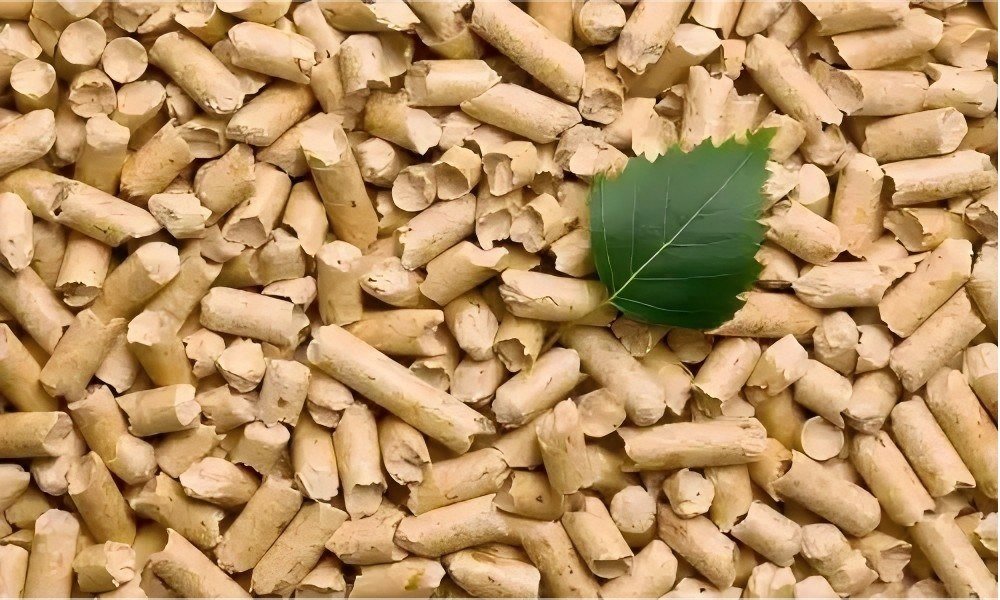
Straw is one of the most widely available agricultural residues that can be processed into biomass pellets. Wheat straw, rice straw, corn stalks, barley straw, oat straw, sorghum stalks, and other crop residues can be converted into compact pellets for biomass fuel and other applications.
However, straw cannot usually be fed directly into a pellet mill or straw pelletizer without proper preparation. Fresh or stored straw can contain excessive moisture, long fibers, dust, soil, stones, metal, plastic, and other contaminants. Its low bulk density and irregular structure can also make conveying and feeding difficult.
Proper raw material preparation is therefore one of the most important steps in straw pellet production.
The objective is to transform irregular agricultural residues into a clean, appropriately sized, and suitably conditioned material that can be fed continuously into the pelletizing system.
A typical preparation process may include:
Straw Receiving → Cleaning → Bale Breaking → Shredding → Drying → Grinding → Screening → Moisture Adjustment → Buffer Storage → Pelletizing
Not every project requires every stage. The actual configuration depends on the straw type, initial moisture, contamination level, required capacity, pellet diameter, and final application.
This article explains how to prepare straw before pelletizing and how each preparation step affects the performance of the pelletizing process.
Why Straw Preparation Is Important
The quality of the raw material entering the pelletizer has a direct influence on pellet quality and production efficiency.
Poorly prepared straw can cause:
- Unstable feeding
- Die blockage
- Low pellet durability
- Excessive fines
- High electricity consumption
- Uneven pellet density
- Increased equipment wear
- Reduced production capacity
In contrast, properly prepared straw is easier to feed, compress, and pelletize.
Preparation also protects downstream equipment from foreign materials.
For example, stones and soil can accelerate wear on grinding components, while metal pieces can damage rotating equipment and the pellet die.
Therefore, raw material preparation should be considered part of the pelletizing system rather than a separate preliminary activity.
Step 1 Check the Type of Straw
The first step is to understand the raw material.
Different agricultural residues have different physical characteristics.
Common materials include:
- Wheat straw
- Rice straw
- Corn stalks
- Barley straw
- Oat straw
- Sorghum stalks
- Cotton stalks
- Rapeseed straw
- Grass residues
The characteristics that should be evaluated include:
- Moisture content
- Fiber length
- Bulk density
- Particle size
- Ash content
- Contamination
- Material hardness
- Storage condition
For example, long and dry wheat straw may require extensive shredding before grinding, while another type of agricultural residue may have a different preparation requirement.
The pelletizing line should therefore be designed around the actual raw material rather than a generic straw specification.
Step 2 Test the Moisture Content
Moisture is one of the most important parameters to check before processing.
Straw that has recently been harvested may contain relatively high moisture. Straw stored outdoors may also absorb water from rain and humidity.
On the other hand, well-dried straw can become very dry.
Both extremes can create problems.
If Straw Is Too Wet
Excessive moisture may result in:
- Poor pellet formation
- Lower pellet durability
- Increased motor load
- Die blockage
- Higher drying costs
- Difficult cooling
If Straw Is Too Dry
Overly dry straw can contribute to:
- Increased dust
- Unstable pellet formation
- Higher material losses
- Poor handling characteristics
The target should therefore be a suitable and stable moisture condition rather than simply making the straw as dry as possible.
In many biomass pelletizing applications, a moisture range around 10% to 15% can be used as an initial reference, but the actual optimum should be determined according to the raw material and equipment.
Step 3 Remove Foreign Materials
Before straw enters the main processing equipment, foreign materials should be removed as much as practical.
Common contaminants include:
- Stones
- Soil
- Sand
- Metal
- Plastic
- Rope
- Twine
- Wood fragments
- Other agricultural residues
Why Is Cleaning Necessary?
Foreign materials can damage the equipment.
Soil and sand are abrasive and can accelerate wear.
Large stones can damage shredders and grinders.
Metal can damage rotating components and dies.
Plastic and twine may wrap around shafts or other moving parts.
Cleaning equipment can therefore improve both machine protection and final pellet quality.
Depending on the raw material, a production line may use cleaning screens, separators, magnetic separators, or manual inspection.
Step 4 Break Straw Bales
Straw is frequently collected and transported in compressed bales.
Baling makes transportation and storage more convenient, but compact bales cannot usually be fed directly into a grinder or pellet mill.
A bale breaker is used to loosen the compressed material.
The machine separates the bale into smaller pieces and creates a more continuous material flow.
Advantages of Bale Breaking
A bale breaker can:
- Reduce manual bale handling
- Improve automatic feeding
- Loosen compacted straw
- Prepare straw for shredding
- Improve production consistency
For small plants, bale breaking may be relatively simple.
For large commercial facilities, an automatic bale feeding and breaking system can significantly reduce labor requirements.
Step 5 Shred Long Straw Fibers
After bale breaking, straw may still contain long fibers.
This is especially common with:
- Wheat straw
- Rice straw
- Barley straw
- Corn stalks
- Oat straw
Long fibers can create feeding and grinding problems.
They may wrap around rotating parts, bridge inside hoppers, or create uneven material flow.
A straw shredder cuts the material into shorter pieces.
Why Fiber Length Matters
The pelletizer works best when the raw material can flow continuously and enter the compression chamber in a relatively consistent condition.
Long fibers can make this difficult.
Shredding improves:
- Material flow
- Grinding efficiency
- Feeding stability
- Particle uniformity
- Pelletizing consistency
The purpose of shredding is not necessarily to produce the final particle size. It is primarily an intermediate preparation step before fine grinding.
Step 6 Dry the Straw When Necessary
If the moisture content is too high, drying is required.
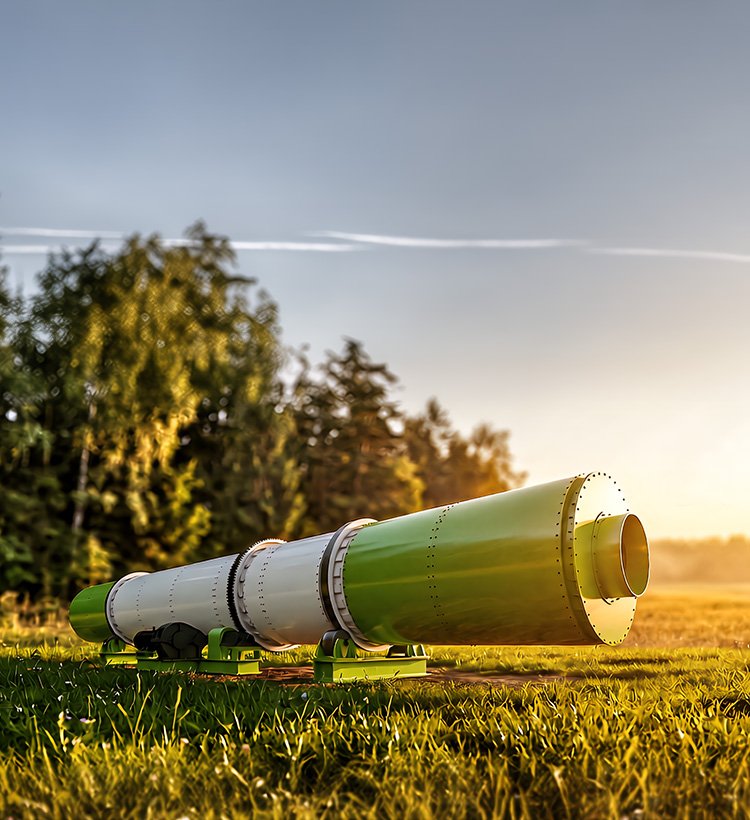
An industrial rotary dryer machine is commonly used for large-scale biomass pellet production.
The dryer uses controlled heat and airflow to remove excess water from the straw.
Factors Affecting Drying
Dryer performance depends on:
- Initial moisture
- Target moisture
- Straw particle size
- Material throughput
- Heat source
- Air temperature
- Residence time
- Ambient conditions
A dryer should be selected according to the actual amount of water that needs to be removed.
For example, two plants with the same pelletizing capacity may require different dryers if their raw materials have significantly different initial moisture levels.
Step 7 Grind the Straw
After shredding and, when necessary, drying, straw is usually ground to a more suitable particle size.
A hammer mill is commonly used for this stage.
The grinding process reduces the straw into smaller particles that can be compressed more consistently during pelletizing.
Why Grinding Matters
Proper particle size can improve:
- Feeding
- Compression
- Pellet density
- Pellet surface quality
- Die performance
- Production stability
However, excessively fine grinding is not always beneficial.
Grinding material much finer than necessary can increase:
- Electricity consumption
- Dust generation
- Equipment wear
The appropriate particle size should be determined according to the straw type, pellet diameter, die configuration, and pellet quality requirements.
Step 8 Screen the Ground Material
After grinding, screening can be used to separate particles according to size.
Oversized particles can be returned to the grinder.
Appropriately sized material can continue toward pelletizing.
A screen can help create a more consistent feedstock.
This is particularly useful when the raw material has a wide range of particle sizes after grinding.
Benefits of Particle Screening
Screening can help:
- Reduce oversized particles
- Improve material uniformity
- Reduce the risk of die blockage
- Improve pellet consistency
- Stabilize pellet mill operation
The exact screen specification depends on the desired final particle size.
Step 9 Control Moisture Again After Grinding
Moisture should not be checked only when the raw material first arrives at the plant.
It is useful to monitor it again after drying and grinding.
The material may change during processing because:
- Heat is generated during grinding
- Moisture may evaporate
- Different batches may have different moisture
- Dried material may absorb moisture from the surrounding air
A moisture meter can be used for rapid checks.
For large plants, moisture monitoring can be integrated into the production management system.
Step 10 Mix Different Straw Materials if Required
Some pellet plants process a mixture of agricultural residues.
For example, producers may combine different types of straw to create a more consistent feedstock.
A mixer can help distribute different materials evenly.
However, mixing should be based on actual material characteristics.
The operator should consider:
- Moisture
- Particle size
- Fiber structure
- Ash content
- Pelletizing behavior
Mixing materials with significantly different moisture levels without proper control can make pelletizing less stable.
Step 11 Use a Buffer Hopper
A buffer hopper is useful between material preparation and pelletizing.
The purpose is to maintain a stable supply of material to the pelletizer.
Without sufficient buffering, changes in the upstream grinding or drying system can immediately affect the pellet mill.
A buffer hopper can help absorb short-term fluctuations.
Why Stable Feeding Matters
The pelletizer performs best when the material supply is relatively consistent.
Too little material may reduce production.
Too much material may overload the machine.
A stable hopper and controlled feeder can help regulate the flow.
Step 12 Use a Controlled Feeding System
The feeding system transfers prepared straw into the pelletizer.
Depending on the plant configuration, a screw feeder, belt feeder, or other controlled feeding equipment may be used.
A variable-frequency drive can be useful for adjusting feeding speed.
Benefits of Controlled Feeding
Controlled feeding helps:
- Prevent overload
- Maintain stable output
- Reduce fluctuations
- Improve pellet quality
- Coordinate upstream and downstream equipment
For high-capacity plants, automatic feeding control can be integrated with the main electrical control system.
Step 13 Condition the Straw Before Pelletizing
Depending on the material and pelletizing system, additional conditioning may be applied.
The objective is to achieve stable moisture and temperature conditions before compression.
Controlled water or steam addition may be used in certain applications.
However, the appropriate method depends on the specific straw and production requirements.
Too much additional moisture can make pellets soft and increase resistance.
Too little moisture may lead to unstable pellet formation.
Therefore, conditioning should be carefully controlled.
How Particle Size Affects Straw Pelletizing
Particle size is closely related to pellet quality.
If particles are too large:
- Compression may be uneven
- Long fibers may cause blockages
- Pellet density may vary
- Die resistance may fluctuate
If particles are excessively fine:
- Electricity consumption increases
- Dust generation increases
- Grinding capacity becomes a bottleneck
The goal is not to make every particle extremely small.
Instead, the objective is to create a particle distribution that is suitable for the pelletizer and desired pellet diameter.
How Moisture Affects Straw Preparation
Moisture and particle size should be considered together.
Wet straw is often more difficult to grind efficiently.
Very dry straw may generate more dust.
Moisture also affects the way particles behave during compression.
For many straw pellet applications, a suitable moisture range is often around 10% to 15%, but this should be verified through actual testing.
The ideal value may vary according to:
- Straw type
- Pellet diameter
- Die compression ratio
- Equipment design
- Production capacity
- Desired pellet quality
How to Prepare Different Types of Straw
Different agricultural residues may require different preparation strategies.
Wheat Straw
Wheat straw is relatively fibrous and may contain long pieces after baling.
A typical process may include:
Bale Breaking → Shredding → Drying → Grinding → Screening → Pelletizing
Rice Straw
Rice straw may have relatively high ash content and can vary considerably in moisture.
Cleaning and appropriate particle preparation are important.
Corn Stalks
Corn stalks are often relatively coarse.
They may require stronger shredding before fine grinding.
Barley Straw
Barley straw can be processed using similar equipment to wheat straw, but actual grinding and pelletizing parameters should be tested.
Preparing Straw for Different Pellet Diameters
The desired pellet diameter affects preparation requirements.
Smaller pellets generally require more controlled particle size.
If oversized fibers enter a die designed for small pellets, they may increase resistance or contribute to blockage.
Larger pellets may tolerate somewhat larger particles, but uniform preparation is still important.
The die hole diameter, compression ratio, and raw material characteristics should therefore be considered together.
What Happens If Straw Is Poorly Prepared?
Poor preparation can create a chain reaction.
For example:
Wet Straw
↓
Poor Grinding
↓
Unstable Feeding
↓
High Pellet Mill Load
↓
Poor Pellet Formation
↓
More Fines
↓
Higher Screening Loss
This illustrates why pelletizing performance cannot be judged only by the pellet mill itself.
The quality of upstream preparation directly affects downstream production.
How to Prepare Straw for High-Capacity Pellet Production
Large plants require more consistent preparation because a small variation can affect a large amount of material.
A high-capacity system may include:
- Automatic bale feeding
- Bale breaker
- Heavy-duty shredder
- Rotary dryer
- High-capacity hammer mill
- Magnetic separator
- Buffer hopper
- Automatic feeder
- Industrial pelletizer
- Automatic cooler
- Vibrating screen
- Packing system
- Central control system
The capacities of these machines must be balanced.
If the dryer is too small, the pelletizer will not receive enough properly conditioned material.
If the grinder is too small, it becomes a bottleneck.
If the cooler is undersized, finished pellets may not be properly stabilized.
Quality Control Before Pelletizing
Before material enters the pelletizer, operators should ideally check several parameters.
Moisture
Is the material within the appropriate moisture range?
Particle Size
Are oversized particles being removed?
Fiber Length
Are long fibers sufficiently reduced?
Contamination
Are stones, metal, plastic, and other foreign materials removed?
Feeding Stability
Can the material flow continuously?
Temperature
Has drying or grinding caused unexpected temperature changes?
These checks can prevent many pelletizing problems.
How to Reduce Preparation Costs
Preparation is necessary, but it should also be efficient.
Several strategies can help.
Avoid Unnecessary Grinding
Do not grind material finer than required.
Optimize Dryer Operation
Do not remove more moisture than necessary.
Reduce Manual Handling
Automatic bale breaking and conveying can reduce labor.
Match Machine Capacity
Avoid installing a very large grinder with a much smaller pelletizer or dryer.
Recycle Suitable Oversized Material
Oversized particles can often be returned to the grinder.
Monitor Energy Consumption
Electricity and thermal energy should be monitored to identify inefficient processing stages.
How to Choose Preparation Equipment
When designing a straw pellet production line, several questions should be answered.
What Is the Straw Type?
Different residues have different fiber characteristics.
What Is the Initial Moisture?
This determines the need for drying and dryer capacity.
How Is the Straw Delivered?
Loose straw and baled straw require different receiving systems.
How Much Contamination Is Present?
This determines the cleaning requirements.
What Is the Required Capacity?
The preparation system should match the desired pellet output.
What Pellet Diameter Is Required?
This influences grinding and screening requirements.
What Is the Final Application?
Fuel pellets, bedding pellets, and other products may have different quality requirements.
How the Prepared Straw Enters the Pelletizer
Once preparation is complete, the material is stored temporarily in a buffer hopper.
A controlled feeder sends the material into the pelletizer.
Inside the pelletizing chamber, rollers compress the prepared straw against the die.
Mechanical pressure and friction generate heat and densify the material.
The compacted material passes through die holes and is cut into pellets.
This is why preparation quality is so important.
The pelletizer is designed to compress the material, not to compensate for extremely wet, contaminated, or excessively coarse raw material.
Post-Pelletizing Equipment
Although this article focuses on preparing straw before pelletizing, downstream equipment is also important.
After pellet formation, the production line may include:
Pelletizing → Cooling → Screening → Packaging
The cooler reduces pellet temperature and stabilizes the product.
The screen removes fines and broken pellets.
The packing machine prepares the finished pellets for transportation or storage.
A properly prepared raw material makes these downstream processes easier to manage.
Frequently Asked Questions
Does straw need to be dried before pelletizing?
Only if its moisture content is too high for stable pellet production. The actual requirement depends on the incoming straw and the pelletizing system.
How small should straw be before pelletizing?
There is no universal particle size. The appropriate size depends on the straw type, pellet diameter, die design, and pelletizer configuration.
Can baled straw be fed directly into a pelletizer?
Generally, baled straw should first be broken and shredded so that the material can be processed consistently.
What machine is used to cut long straw?
A straw shredder or cutter is commonly used to reduce long fibers before fine grinding.
Why is a hammer mill used for straw?
A hammer mill further reduces the particle size after initial shredding, helping create material that is more suitable for compression.
How do I know whether straw moisture is suitable?
Use representative samples and measure moisture with a suitable moisture meter. Actual pelletizing tests can provide additional confirmation.
Can different types of straw be mixed?
Yes, different agricultural residues can potentially be mixed, but their moisture, particle size, fiber structure, and pelletizing characteristics should be evaluated.
Does straw preparation affect pellet durability?
Yes. Moisture, particle size, fiber length, and material uniformity all affect how effectively straw particles bond during compression.
What is the most important preparation step?
There is no single step that is always the most important. Moisture, particle size, contamination, fiber length, and feeding stability all need to be controlled.
(Learn more at:RICHI Pelletizer)
Conclusion
Preparing straw properly before pelletizing is essential for stable production and consistent pellet quality. Agricultural residues are naturally variable materials, and their moisture, fiber length, particle size, contamination, and bulk density can change significantly from one batch to another.
A typical preparation process may include:
Cleaning → Bale Breaking → Shredding → Drying → Grinding → Screening → Moisture Adjustment → Buffer Storage → Controlled Feeding
The exact equipment configuration should be determined by the raw material and production requirements.
The purpose of preparation is not simply to make straw smaller. It is to create a clean, consistent, appropriately moist, and easily flowable feedstock that the straw pelletizer can compress efficiently.
When designing a complete straw pellet production line, attention should therefore be given to every stage before the pelletizer. A properly selected bale breaker can improve feeding, an effective shredder can reduce long fibers, a suitable dryer can control moisture, a correctly configured hammer mill can provide appropriate particle size, and a stable feeding system can help the pelletizer operate continuously.
Ultimately, successful straw pelletizing starts before the material reaches the pelletizer. Better raw material preparation can help reduce blockages, improve pellet quality, stabilize production, control energy consumption, and extend the service life of key pelletizing components.