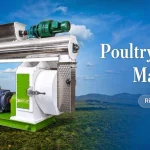
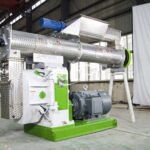
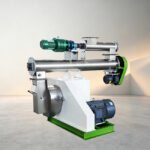
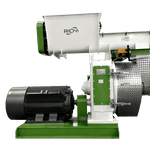

Aquaculture has become an increasingly important part of the global food supply, and the demand for high-quality fish feed continues to grow. As fish farmers seek better feed efficiency, stable nutritional performance, and easier feeding management, floating feed has become a popular choice for many aquaculture operations. A reliable floating fish feed extruder machine is one of the key pieces of equipment used to manufacture this type of feed.
Compared with traditional feed pelletizing, extrusion technology provides greater control over feed density, shape, texture, moisture, and buoyancy. By adjusting extrusion conditions and product formulation, manufacturers can produce feed that remains on the surface of the water for an appropriate period. This makes it easier for farmers to observe fish feeding activity, adjust feeding rates, and reduce unnecessary feed waste.
For small and medium-sized aquaculture feed manufacturers, selecting equipment that matches actual production requirements is particularly important. A machine with excessive capacity may increase investment and operating costs, while insufficient capacity may limit production. The 0.2-0.4 T/H floating fish feed extruder machine for sale can be a practical option for businesses that require flexible and relatively small-scale floating fish feed production.
This article explains the working principle, production process, advantages, applications, equipment selection factors, and maintenance requirements of a floating fish feed extruder machine. It also discusses how Richi manufacture can provide equipment solutions for businesses planning to establish or upgrade a floating fish feed production line.
What Is a Floating Fish Feed Extruder Machine?
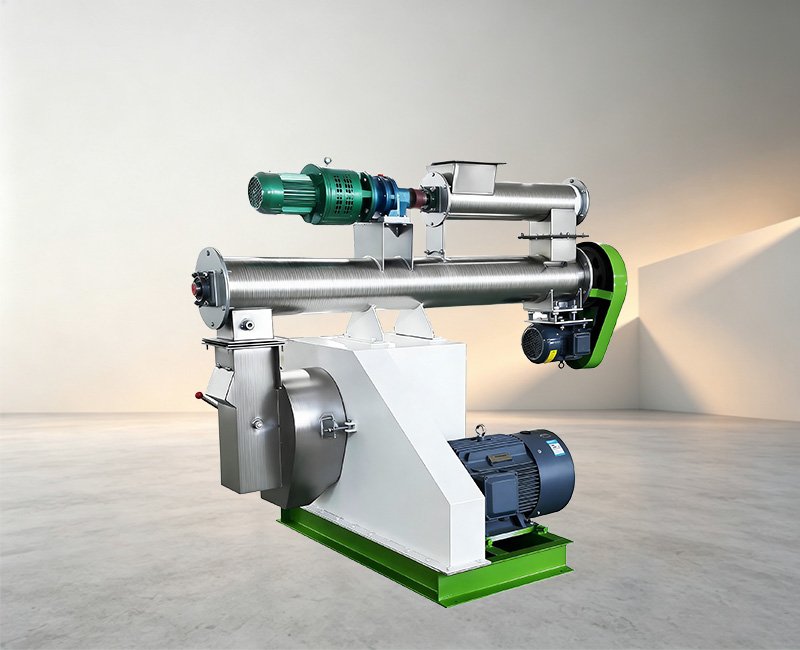
A floating fish feed extruder machine is specialized equipment used to produce floating fish feed pellets through an extrusion process. It combines mechanical pressure, heat, moisture, and controlled processing conditions to transform a mixture of feed ingredients into shaped pellets with a relatively low bulk density.
The basic principle is straightforward. Prepared feed ingredients enter the extruder through a feeding system. Inside the extrusion chamber, one or more screws transport and compress the material. Mechanical shear and controlled heat cause physical and chemical changes in the feed mixture.
As the material reaches the outlet, it is forced through a die. The pressure difference between the inside of the extrusion chamber and the surrounding environment causes the material to expand as it exits the die. A cutter then divides the extruded material into individual pellets.
The expansion process is particularly important for floating feed. It can create a porous internal structure that reduces bulk density, allowing the pellets to remain on the surface of the water.
The final floating characteristics depend on several factors, including formulation, moisture, starch content, extrusion temperature, pressure, screw configuration, die design, and cutting speed.
Why Is Floating Fish Feed Popular?
Floating fish feed offers several practical advantages for aquaculture farmers.
One of the biggest benefits is feeding visibility. Because floating pellets remain on the water surface for a period of time, farmers can observe how actively the fish are feeding.
This makes it easier to determine whether the feeding quantity is appropriate. If excessive feed remains on the water surface, the operator can reduce the amount provided during the next feeding.
This type of feeding management can help reduce unnecessary feed consumption and improve the overall efficiency of aquaculture operations.
Floating feed can also be convenient for automated feeding systems. Uniform pellet size and predictable physical characteristics allow feeding equipment to distribute the product more consistently.
In addition, extrusion can produce feed with good physical stability when the formulation and processing conditions are properly controlled.
Main Applications
Floating fish feed extrusion technology is used for many types of freshwater and aquaculture species.
Depending on the formulation and product specifications, extruded floating feed can be manufactured for species such as:
- Tilapia
- Carp
- Catfish
- Trout
- Certain ornamental fish
- Other freshwater aquaculture species
The nutritional formula should always be developed according to the requirements of the target species and growth stage.
Different fish require different levels of protein, fat, fiber, vitamins, minerals, and other nutrients. Therefore, extrusion equipment must be selected and operated according to the specific feed formulation.
How Does a Floating Fish Feed Extruder Machine Work?
A typical floating fish feed production process involves several stages.
1. Raw Material Preparation
The first step is selecting and preparing feed ingredients.
Common raw materials include fish meal, soybean meal, corn, wheat, rice products, wheat bran, vegetable protein sources, fish oil, vitamins, minerals, and other nutritional ingredients.
The formulation depends on the target fish species and product requirements.
Raw materials should be clean and suitable for feed production. Foreign materials such as stones, metal, plastic, and other contaminants should be removed before processing.
2. Crushing
Many ingredients need to be ground before mixing.
A hammer mill or similar grinding machine reduces the particle size of the ingredients.
Uniform particle size can improve mixing performance and help the extruder produce more consistent pellets.
For small floating feed, fine grinding can be particularly important because smaller particles can improve pellet surface quality and reduce the risk of large particles affecting pellet formation.
3. Batching and Mixing
After grinding, ingredients are accurately weighed and mixed according to the feed formula.
A high-quality mixer should distribute ingredients evenly throughout the batch.
Uniform mixing is essential because every finished pellet should contain a relatively consistent nutritional composition.
Poor mixing can result in variations in protein, minerals, vitamins, and other components.
4. Conditioning
Before extrusion, the feed mixture may be conditioned by adding water and heat.
Conditioning softens the material and prepares it for the extrusion process.
It can also help improve starch gelatinization and extrusion stability.
The appropriate moisture and temperature depend on the formulation and machine configuration.
5. Extrusion
The conditioned material enters the floating fish feed extruder machine.
The screw system moves the material forward while applying mechanical pressure and shear.
As the material travels through the extrusion chamber, temperature and pressure increase.
The material is then forced through the die.
When it exits the die, the sudden pressure reduction causes the processed material to expand.
This expansion creates a lower-density structure that helps the finished pellets float.
6. Cutting
The extruded material is cut into pellets by a rotating knife.
The pellet diameter is largely determined by the die opening, while pellet length depends on cutter speed and operating conditions.
Different pellet sizes can be produced for different fish species and growth stages.
7. Drying
Freshly extruded feed usually contains considerable moisture.
A drying machine reduces moisture to an appropriate level for storage.
Controlled drying is essential because excessive moisture can reduce shelf life and encourage deterioration.
Over-drying should also be avoided because it can increase energy consumption and affect product quality.
8. Cooling
After drying, the pellets are cooled.
Cooling helps stabilize the product before packaging or further processing.
It also reduces the risk of condensation when warm feed is packaged too quickly.
9. Screening
A screening machine removes fines and irregular pellets.
Fines can often be returned to the production process, reducing raw material waste.
10. Packaging
Finally, the finished feed is weighed and packaged.
Automatic packaging systems can improve weighing accuracy, production efficiency, and overall product consistency.
The Importance of Extrusion Parameters
Producing high-quality floating fish feed requires careful control of extrusion parameters.
Moisture
Moisture plays an important role in the extrusion process.
It affects material flow, temperature, pressure, starch gelatinization, and pellet expansion.
Too much moisture can reduce expansion and produce denser pellets, while insufficient moisture may increase friction and make extrusion unstable.
Temperature
Temperature affects the physical properties of the feed mixture.
The appropriate temperature depends on the formulation and processing conditions.
Stable temperature control can contribute to consistent product quality.
Pressure
Pressure inside the extrusion chamber contributes to the processing and expansion of the feed material.
The correct pressure depends on screw configuration, die design, feed formulation, and operating conditions.
Screw Speed
Screw speed influences material residence time, shear, throughput, and energy consumption.
Increasing screw speed does not necessarily produce better feed. Operators need to find a suitable balance between production capacity and product quality.
Die Design
The die determines pellet diameter and influences extrusion pressure.
Different pellet sizes require different die specifications.
A manufacturer should recommend die configurations based on the customer’s target feed size and formulation.
Advantages of a Floating Fish Feed Extruder Machine
A modern extrusion system can provide several advantages for commercial feed production.
Producing Floating Feed
The most important advantage is the ability to manufacture feed with controlled buoyancy.
The expansion effect created during extrusion can reduce pellet density and allow the feed to float.
Flexible Pellet Sizes
Different die specifications allow manufacturers to produce various pellet diameters.
This makes the equipment suitable for different fish species and growth stages.
Better Feeding Management
Floating feed makes feeding activity easier to observe.
Farmers can monitor whether fish are actively consuming the feed and adjust feeding quantities accordingly.
Flexible Formulations
Extrusion technology can process a wide range of feed formulations.
Manufacturers can develop different products for different markets and nutritional requirements.
Continuous Production
Commercial extruders are designed for continuous operation.
When integrated with automatic feeding, conveying, drying, cooling, and packaging systems, they can provide stable production.
0.2-0.4 T/H Floating Fish Feed Extruder Machine for Sale
For small feed factories, research facilities, aquaculture businesses, and companies entering the floating fish feed market, production capacity is an important consideration.
The 0.2-0.4 T/H floating fish feed extruder machine for sale is designed for applications that require a relatively compact production capacity.
A nominal output range of 0.2 to 0.4 tons per hour can be suitable for small and medium-sized production projects, depending on the actual formulation and operating conditions.
For example, at a nominal capacity of 0.2 tons per hour, eight hours of theoretical operation could produce approximately 1.6 tons. At 0.4 tons per hour, the theoretical output could reach approximately 3.2 tons during eight hours.
Actual production will depend on raw material characteristics, pellet size, machine configuration, moisture, operating conditions, cleaning, maintenance, and production changes.
Therefore, buyers should consider expected daily production rather than relying only on the machine’s maximum rated capacity.
Who Can Use a 0.2-0.4 T/H Machine?
A small-capacity extrusion system can be suitable for several types of businesses.
Small Fish Feed Manufacturers
Small feed factories may need to produce a limited quantity of floating feed for local markets.
A compact extruder can provide an appropriate starting point without requiring a very large investment.
Integrated Aquaculture Farms
Some large farms prefer to manufacture part of their own feed.
An appropriately sized extruder can help farms produce feed according to their own formulas and feeding programs.
Feed Research and Development
Research facilities and feed formulation companies may require smaller equipment for testing new formulations.
A compact machine can allow manufacturers to evaluate different ingredients and processing parameters before scaling up.
New Feed Businesses
For companies entering the aquaculture feed market, a smaller production line can provide a practical way to start operations and develop market demand.
Future expansion can be considered when production requirements increase.
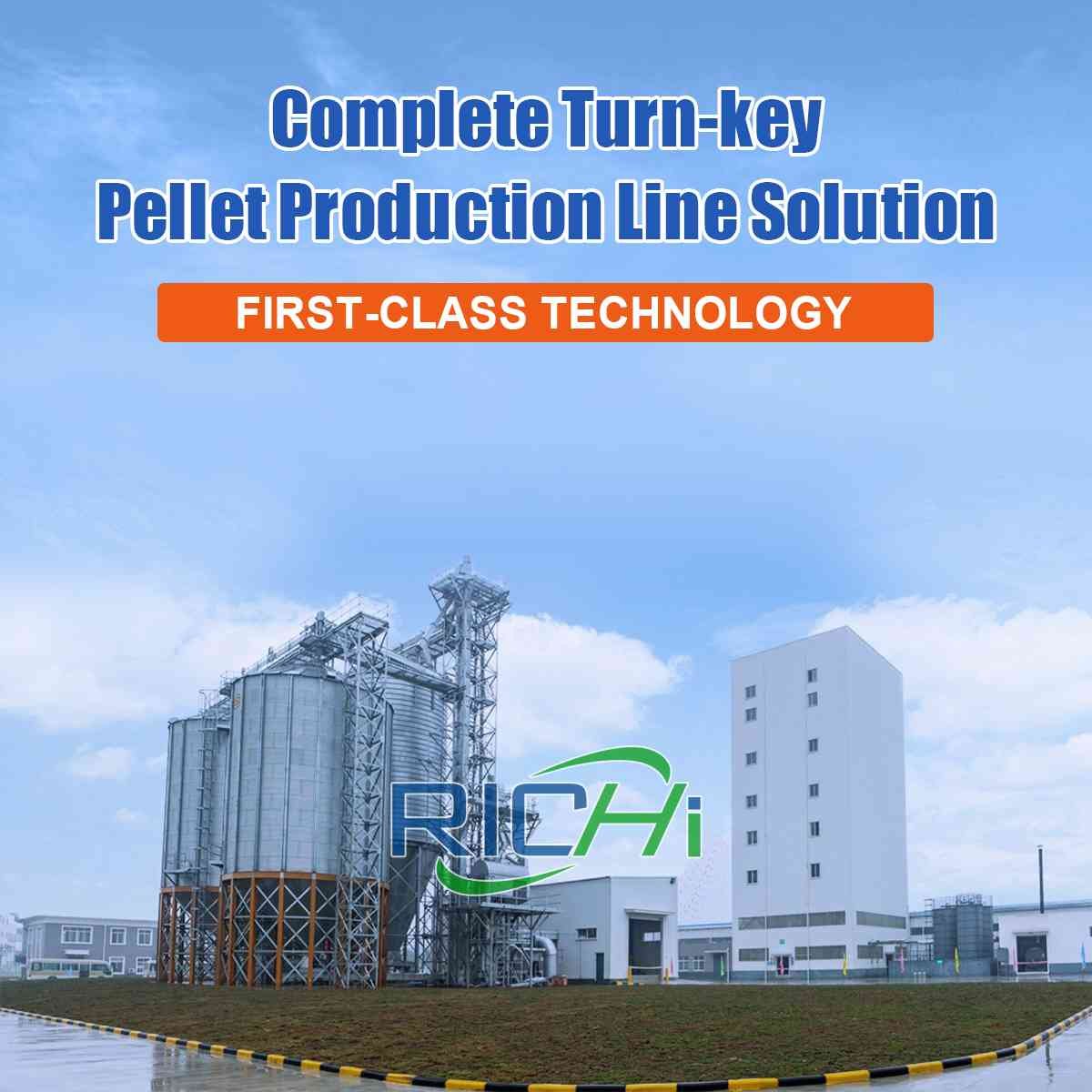
Complete Floating Fish Feed Production Line
The extruder is only one component of a complete floating fish feed production line.
A typical production line may include:
- Raw material receiving system
- Cleaning equipment
- Feed hammer mill
- Batching system
- Feed mixer
- Conditioner
- Floating fish feed extruder
- Cutting system
- Multi-layer dryer
- Cooling machine
- Screening machine
- Conveying equipment
- Packaging machine
- Finished product storage
The exact equipment configuration depends on the required production capacity, raw material formulation, factory layout, automation requirements, and final product specifications.
A balanced production line is important. If the dryer or cooler cannot process the output of the extruder, the actual production capacity of the entire factory will be limited.
Choosing the Right Extruder
Selecting a floating fish feed extruder should involve more than comparing prices.
Production Capacity
Determine the expected hourly and daily output.
If the actual market demand is small, an oversized machine may increase investment and operating costs.
If demand is expected to grow rapidly, the manufacturer should consider future expansion when designing the production line.
Feed Size
The target pellet diameter should be confirmed before purchasing the machine.
Different fish sizes require different feed sizes.
Formula
The feed formulation affects extrusion performance.
High-protein, high-starch, high-fiber, and other formulations can behave differently during extrusion.
Providing the equipment supplier with accurate formulation information can help them recommend suitable equipment parameters.
Automation
Some businesses require simple manual operation, while others prefer automated feeding, batching, conveying, drying, and packaging.
The appropriate automation level should be selected according to production scale and labor availability.
Energy Consumption
Electricity and thermal energy contribute to operating costs.
The complete production line should therefore be evaluated for energy efficiency rather than looking only at the main extruder motor.
Maintenance
The machine should be designed so that important components can be inspected and maintained conveniently.
Wear components such as screws, dies, cutting knives, bearings, and other parts should be readily replaceable.
Why Choose Richi Manufacture?
Selecting the right equipment manufacturer is an important part of a successful fish feed production project.
Richi manufacture provides feed processing equipment and complete production line solutions for different feed applications.
For floating fish feed projects, equipment selection should be based on the customer’s specific requirements rather than using the same configuration for every factory.
Important information includes raw material types, feed formula, desired capacity, pellet diameter, number of working hours, factory space, and automation requirements.
Based on these factors, the manufacturer can recommend a more suitable extrusion system and auxiliary equipment.
A complete technical solution can also help customers coordinate the extruder with the grinder, mixer, dryer, cooler, screening system, conveying equipment, and packaging machine.
Improving Floating Feed Quality
Producing consistent floating feed requires good process management.
Maintain Uniform Raw Materials
Raw materials should have stable quality and particle size.
Variations in ingredients can influence extrusion performance and final pellet quality.
Control Moisture
Moisture should be monitored during conditioning and extrusion.
Stable moisture can help maintain consistent expansion and buoyancy.
Optimize Extrusion Conditions
Operators should monitor temperature, pressure, screw speed, and feeding rate.
Small changes in these parameters can influence product density and texture.
Maintain the Die and Cutter
A worn die can affect pellet diameter and production efficiency.
A poorly adjusted cutter can produce irregular pellet lengths.
Regular inspection helps maintain stable product quality.
Control Drying
The dryer should remove moisture evenly without damaging the product.
Uneven drying can result in differences in moisture content between pellets.
Floating Fish Feed and Water Management
Feed quality can influence aquaculture management.
When floating pellets remain visible on the water surface, farmers can monitor consumption more easily.
This visibility can help reduce overfeeding.
Excess feed that remains uneaten can contribute to water quality problems. Therefore, good feeding management is essential.
Floating feed does not automatically eliminate waste. Its benefits depend on appropriate formulation, pellet stability, feeding rates, and farm management practices.
Farmers should adjust feeding according to fish appetite, water temperature, stocking density, fish size, and other production conditions.
Maintenance of a Floating Fish Feed Extruder Machine
Regular maintenance is essential for stable production.
Before inspection or maintenance, the equipment should be shut down according to appropriate safety procedures.
The extrusion chamber should be cleaned after production to prevent material accumulation.
Screws and dies should be inspected for wear.
Cutting knives should be checked and adjusted regularly.
Bearings and drive components should receive appropriate lubrication according to the manufacturer’s recommendations.
Electrical connections, motors, temperature sensors, and safety systems should also be inspected periodically.
A preventive maintenance schedule can reduce unexpected downtime and extend equipment service life.
Common Production Problems
Floating feed manufacturers may encounter several common problems.
If the pellets sink instead of floating, possible causes include insufficient expansion, excessive moisture, unsuitable formulation, incorrect extrusion conditions, or improper drying.
If the pellets are too fragile, the manufacturer may need to examine formulation, moisture, die condition, and extrusion parameters.
If production capacity is lower than expected, operators should inspect the feeding system, raw material preparation, machine load, die condition, and operating parameters.
If energy consumption is unusually high, possible causes may include excessive moisture, unsuitable processing conditions, excessive friction, or worn components.
Troubleshooting should be systematic so that the actual cause can be identified and corrected.
Storage of Floating Fish Feed
Proper storage is important after production.
Finished feed should be kept in a clean, dry, and well-ventilated warehouse.
The product should be protected from moisture, direct sunlight, insects, rodents, and contamination.
Bags should not be placed directly on a wet floor. Pallets or suitable storage platforms can help improve ventilation and protect packaging.
Storage conditions should also be managed according to the nutritional composition and shelf-life requirements of the feed.
Future Development of Fish Feed Production
As aquaculture becomes more intensive and professional, demand for efficient feed production technology is likely to continue.
Manufacturers are increasingly interested in automation, energy efficiency, precise formulation, improved pellet quality, and flexible production systems.
Modern extrusion technology provides manufacturers with greater control over product characteristics.
The ability to produce different feed sizes and formulations using a single production system can also help companies respond to changing market demand.
For small and medium-sized feed producers, compact extrusion systems can provide a practical entry point into commercial feed manufacturing.
Conclusion
A floating fish feed extruder machine is an important piece of equipment for producing high-quality floating fish feed. Through controlled extrusion, manufacturers can produce feed with suitable expansion, density, shape, and buoyancy for different aquaculture applications.
The 0.2-0.4 T/H floating fish feed extruder machine for sale can be an attractive option for small and medium-sized feed production projects, integrated aquaculture farms, feed research facilities, and new businesses entering the fish feed market.
However, successful feed production depends on more than the extruder itself. Raw material preparation, grinding, batching, mixing, conditioning, drying, cooling, screening, and packaging must all work together as a complete system.
When selecting equipment, buyers should consider production capacity, feed formulation, pellet diameter, desired buoyancy, energy consumption, automation level, maintenance requirements, spare parts, and technical support.
Working with an experienced supplier such as Richi manufacture can help businesses develop a production line that matches their actual requirements. A customized equipment solution can improve production stability while providing greater flexibility for future expansion.
Whether you are building a new floating fish feed factory, expanding an existing feed production line, or producing feed for your own aquaculture farm, selecting appropriate extrusion equipment is an important step toward efficient and consistent production.
For more information about floating fish feed extrusion equipment, complete fish feed production lines, machine configurations, and customized solutions, click for more.