

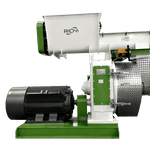
Direct answer: the supplied 2025 comparison shows ANDRITZ with the broadest publicly documented certification portfolio among the four reviewed companies, followed by Bühler. RICHI Machinery is rated “Moderate to High,” and AMANDUS KAHL is rated “Moderate.” That result does not mean ANDRITZ has the largest audited number of individually certified pellet mills. Most manufacturers do not publish a machine-by-machine certification count, so the chart compares the breadth of official public documentation relevant to manufacturing safety and quality.

Read the chart as an evidence map, not a league table of machines
The title asks which companies have the “most certified pellet mills,” but that number is generally unavailable. A manufacturer may hold a group management-system certificate covering several sites, separate certificates for particular factories, conformity documents for machine models shipped into regulated markets, and third-party inspection reports for individual customer orders. These are different units of evidence. Adding them into one count would produce a false comparison.
The infographic therefore uses a narrower and auditable method: it records whether clear information was found in official company sources for selected certification categories. A check mark means publicly stated coverage was identified; a dash means it was not identified in the review. A dash is not proof that a company lacks a system or certificate. It means buyers should request current evidence instead of assuming it exists.
The four-company result, exactly as shown
| Company | ISO 9001 | ISO 14001 | ISO 45001 | CE / EU conformity publicly stated | Third-party certification or inspection publicly stated | Additional public certifications | Chart rating |
|---|---|---|---|---|---|---|---|
| ANDRITZ | Yes | Yes | Yes | Not identified in the chart | Not identified in the chart | ISO 50001, ISO 3834-2, EN 1090-1, PED/AD2000, ASME | Very High |
| Bühler | Yes | Yes | Yes | Not identified in the chart | Not identified in the chart | Not identified in the chart | High |
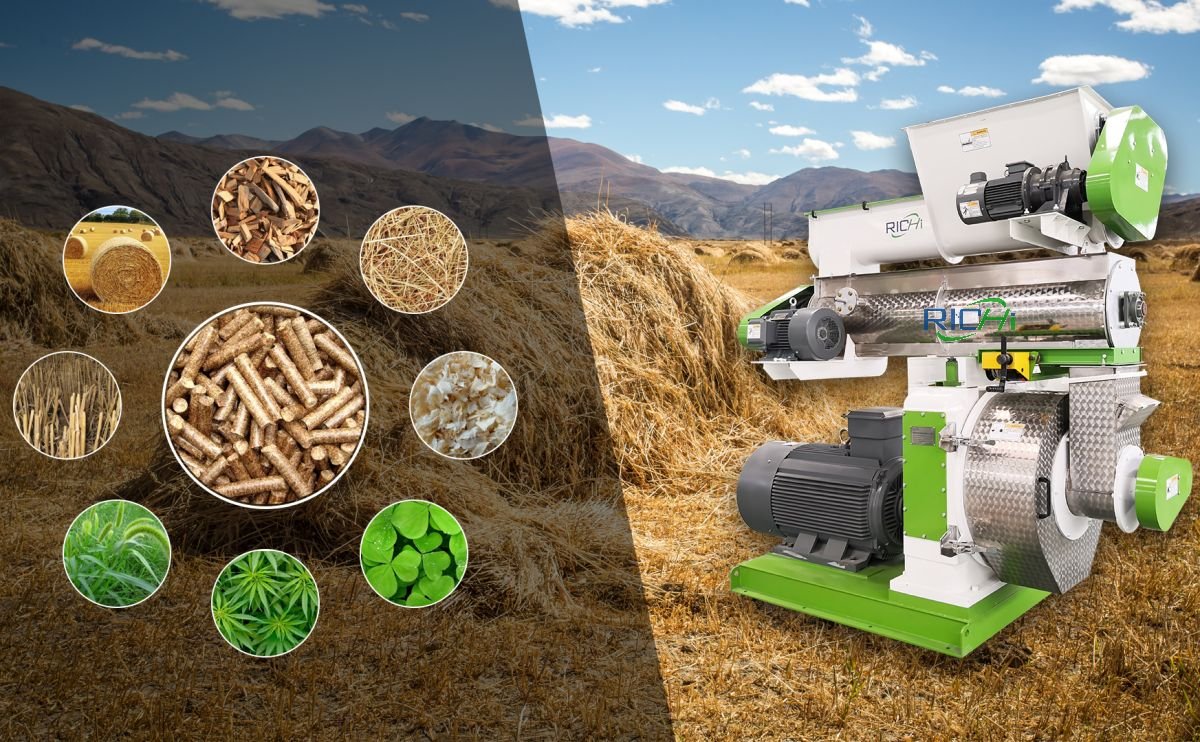
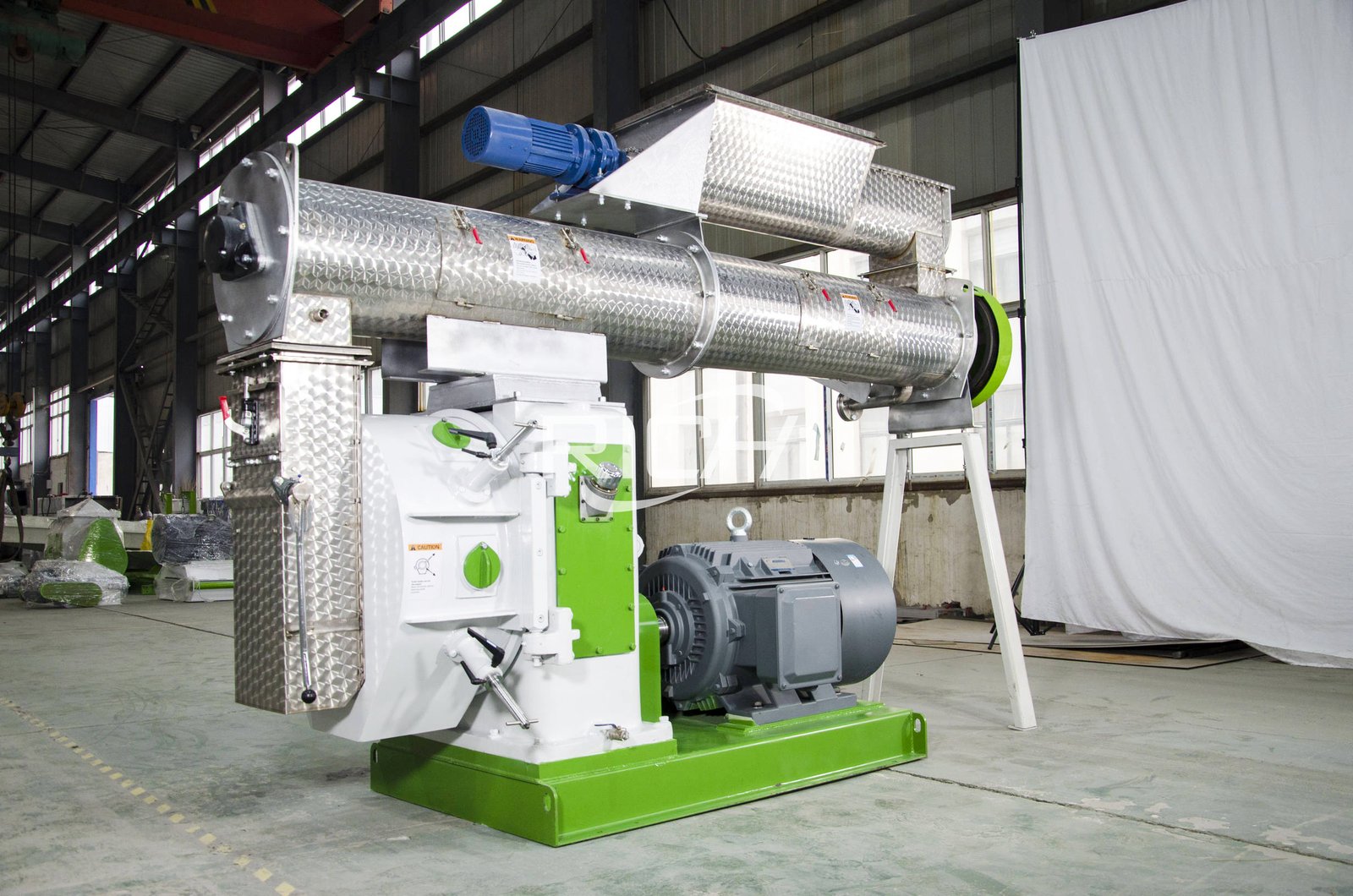
| RICHI Machinery | Yes | Not identified in the chart | Not identified in the chart | Yes | SGS and BV | Not identified in the chart | Moderate to High |
| AMANDUS KAHL | Yes | Not identified in the chart | Not identified in the chart | Not identified in the chart | Not identified in the chart | Not identified in the chart | Moderate |
This transcription deliberately preserves every check mark and dash in the image. It does not upgrade a dash into a negative claim, and it does not treat unrelated certificates elsewhere in a diversified industrial group as proof that a particular pellet mill or manufacturing site falls within scope.
What each evidence category tells a pellet-mill buyer
ISO 9001: a quality-management system, not a performance certificate
ISO 9001 concerns the organization’s quality-management processes. It can support document control, purchasing control, corrective action, traceability, inspection, and continual improvement. It does not certify that every pellet mill reaches a particular tonnes-per-hour output, energy consumption, pellet durability, or service life. Those performance obligations belong in the project specification and acceptance test.
ISO 14001 and ISO 45001: organizational systems with defined scope
ISO 14001 addresses environmental management, while ISO 45001 addresses occupational health and safety management. Their value depends on the legal entity, address, activities, and sites written on the certificate. A group can report broad multi-site coverage while a buyer still needs to verify that the factory producing the pellet mill is included.
Current official ANDRITZ reporting describes multi-site certification for ISO 9001, ISO 14001, and ISO 45001, plus additional schemes across parts of its portfolio. Its management-systems page explains the integrated approach and notes that individual locations can hold additional certifications. The official Feed & Biofuel location page for Pomerode provides downloadable ISO 9001, ISO 14001, and ISO 45001 certificates. This is stronger evidence than an unsupported badge because it lets a buyer inspect site and scope.
CE marking and EU conformity: product compliance, not an ISO management system
CE marking is a manufacturer’s declaration that a product placed on the relevant European market meets applicable EU requirements. It is not a universal third-party quality award. For a pellet mill or line, the evidence package may include a Declaration of Conformity, applied standards, risk assessment, instructions, electrical documentation, guarding information, and the identity of the responsible manufacturer. For partly completed machinery, the required document may instead be a Declaration of Incorporation, depending on the supplied scope.
The chart records CE/EU conformity as publicly stated for RICHI and leaves the other three rows blank in that specific column. That does not establish that the other manufacturers cannot supply compliant machinery. It only reflects what the image’s 2025 official-source review chose to document. A buyer importing into the EU should request the model-specific declaration and technical documentation regardless of the chart.
SGS and BV: ask what was inspected
The RICHI row lists SGS and BV under third-party certification or inspection. The names alone do not reveal whether the engagement covered a management system, factory audit, shipment inspection, material verification, or a specific machine. Procurement should request the report or certificate number, client, date, scope, result, and permission to verify it with the issuing body. A pre-shipment inspection for one order cannot be generalized into certification of every pellet mill.
Why ANDRITZ ranks first in the visual
ANDRITZ receives three management-system checks—ISO 9001, ISO 14001, and ISO 45001—and the chart also lists ISO 50001, ISO 3834-2, EN 1090-1, PED/AD2000, and ASME. That is the widest documented set among the four rows, so “Very High” is consistent with the chart’s stated method. The combination suggests public evidence across quality, environment, occupational safety, energy management, welding or fabrication, structural execution, pressure equipment, and pressure-code domains.
However, relevance must still be tested. A pressure-equipment or welding certificate may be important for a steam-conditioning system, pressure vessel, or fabricated assembly, yet not prove the throughput of a pellet press. EN 1090-1 may be relevant to structural components within its scope, but it is not a pellet-quality certificate. The correct conclusion is that ANDRITZ publishes the broadest portfolio in this comparison—not that every listed credential applies to every pellet mill.
Why Bühler is rated High
Bühler has checks for ISO 9001, ISO 14001, and ISO 45001, giving it multi-system coverage across quality, environmental management, and occupational health and safety. The chart does not list CE/EU, a third-party inspection name, or additional certifications for Bühler, so its overall rating is “High” rather than “Very High.” Bühler’s official annual reporting has discussed ISO 9001, ISO 14001, and ISO 45001 activities; buyers should still obtain the current certificates for the actual contracting and manufacturing entities.
A global group can contain many sites with different certificate boundaries. The correct procurement question is not “Is Bühler ISO certified?” but “Does this current certificate include the legal entity and factory that will design, manufacture, assemble, or test our supplied equipment?”
How to interpret RICHI’s Moderate-to-High rating
RICHI’s evidence pattern is different. The chart records ISO 9001, CE/EU conformity, and named third-party organizations SGS and BV. It does not record ISO 14001 or ISO 45001, and no additional certification is listed. “Moderate to High” therefore reflects a mix of quality-system, product-conformity, and inspection documentation rather than the three-management-system pattern shown for ANDRITZ and Bühler.
For a buyer, this pattern can be relevant when product documentation and order inspection are immediate priorities. It does not eliminate the need to inspect scope. Ask RICHI for the current ISO 9001 certificate, the exact EU conformity document for the proposed machine and configuration, and the SGS or BV record applicable to the transaction. If environmental or occupational-safety management certification is a mandatory vendor-qualification criterion, request current evidence explicitly because the infographic does not show it.
What AMANDUS KAHL’s Moderate rating means
The AMANDUS KAHL row contains one check, for ISO 9001, and dashes in the remaining categories. The chart therefore assigns “Moderate.” Again, the dashes mean the 2025 review did not identify clear public documentation in those columns; they should not be rewritten as proof of absence. A procurement team interested in KAHL equipment should request current environmental, occupational-safety, product-conformity, and third-party evidence directly and evaluate it on the same basis used for the other suppliers.
A certificate-verification workflow that prevents false confidence
- Define the required evidence. Separate management-system certificates, product conformity, factory acceptance records, materials documents, welding qualifications, and third-party inspections.
- Match the legal entity. The name on the certificate should match the contracting or manufacturing entity, or the supplier should document the relationship.
- Match the address and scope. Confirm that the manufacturing site and activities relevant to pellet-mill production are included.
- Check dates. Review issue date, expiry date, surveillance status, and any transition to a newer standard edition.
- Verify the issuer. Use the certification body’s directory or contact channel where available; do not rely on a logo copied into a brochure.
- Match the product. For CE/EU documentation, confirm the model, serial number where applicable, directives or regulations, standards, signatory, and supplied configuration.
- Match the order. For SGS, BV, or another inspection provider, confirm the inspection scope, sampling plan, acceptance criteria, date, and report identity.
- Preserve the evidence. Attach verified documents to the vendor-approval record and purchase contract, with responsibility for renewal or notification of suspension.
Worked procurement example: breadth versus applicability
Suppose a buyer assigns 25 points to a valid ISO 9001 certificate covering the manufacturing site, 15 each to ISO 14001 and ISO 45001 when required by corporate policy, 25 to complete model-specific conformity documentation, and 20 to an order-specific independent inspection plan. This is an illustrative scoring model, not an industry standard.
A supplier with all three ISO systems but incomplete product documentation could score 55 points. Another with ISO 9001, complete model-specific conformity evidence, and an agreed third-party inspection could score 70. The second supplier may present lower public certification breadth yet better evidence for that particular order. If the buyer’s governing requirement instead mandates ISO 14001 and ISO 45001 as pass/fail conditions, the decision changes. This is why the chart should begin due diligence, not end it.
Connect certification evidence to actual pellet-mill risk
Certification has value when it controls a real failure path. For example, inconsistent incoming steel or undocumented heat treatment can affect component durability; quality-system controls should govern approved suppliers, inspection, nonconformance, and traceability. Inadequate guarding or interlocking can expose operators to moving parts; product risk assessment and conformity documentation should address the machine configuration. Poor dust control can create housekeeping, health, and combustible-dust hazards; plant design, local codes, operating procedures, and site risk assessment must address the entire process, not merely the pellet press.
No certificate replaces factory acceptance testing. The purchase specification should define raw material, moisture, particle size, conditioning, throughput, electrical limits, pellet dimensions, durability or fines criteria where relevant, noise requirements, safety devices, and the measurement method. Certification can increase confidence in the system used to execute the work; acceptance testing verifies the promised result for the project.
Procurement conclusion
Among the four companies in the supplied 2025 infographic, ANDRITZ has the broadest publicly documented certification portfolio and is rated Very High. Bühler follows with High; RICHI Machinery is Moderate to High; AMANDUS KAHL is Moderate. Those rankings faithfully describe the image’s official-source documentation review.
They do not answer how many individual pellet mills are certified, because an audited unit-by-unit count was not available. The responsible buyer should shortlist suppliers using public breadth, then verify current certificate scope, manufacturing site, product conformity, third-party report applicability, and project acceptance evidence. The company with the “most” useful certification is ultimately the one whose valid documents cover the actual factory, machine, market, and risks in the purchase—not the one with the longest row of logos.