



Bamboo is often associated with construction materials, furniture, handicrafts, and food products. However, another opportunity is receiving increasing attention: converting bamboo residues into standardized biomass fuel.
Large quantities of bamboo leaves, branches, processing scraps, crushed stalks, and rejected bamboo products can be generated during harvesting and manufacturing. When these materials are simply discarded or burned in open areas, they represent both a resource loss and a potential environmental problem.
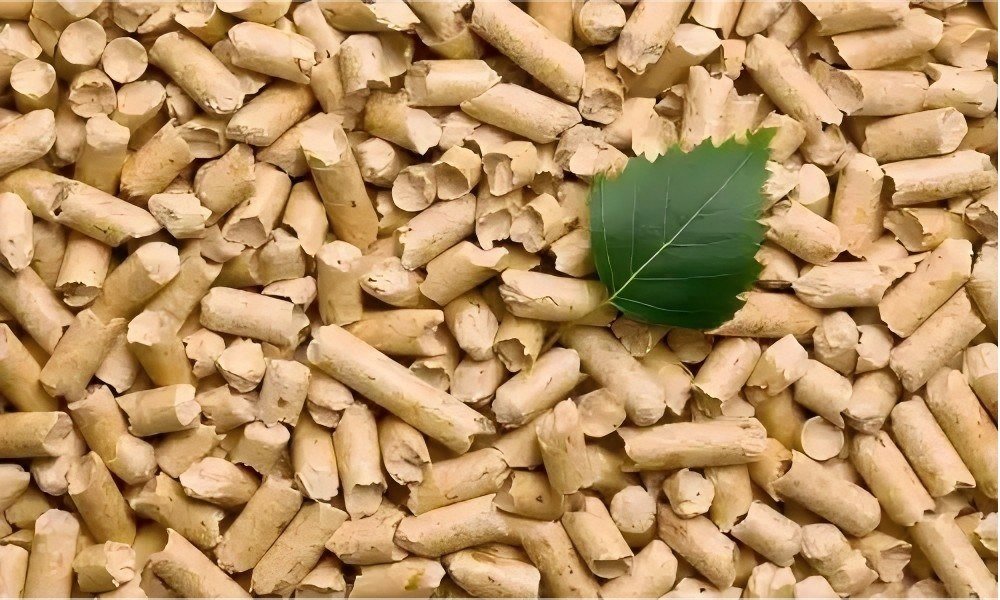
Pellet production provides another option. By reducing bamboo residues into suitable particles, controlling moisture, and applying mechanical compression, producers can transform loose biomass into dense and easier-to-handle fuel.
The interesting part is that a bamboo pellet project does not necessarily have to begin with a large industrial factory. Depending on the raw material supply, local energy demand, and investment budget, small and medium-sized facilities can also create practical business models.
Why Bamboo Residues Are Worth Processing
One of the biggest advantages of bamboo is its rapid growth. In regions where bamboo plantations are common, raw material availability can be relatively stable.
However, not every part of harvested bamboo enters a finished product. Processing operations may generate:
- Bamboo branches
- Bamboo strips
- Bamboo sawdust
- Bamboo shavings
- Small bamboo pieces
- Bamboo powder
- Manufacturing offcuts
- Bamboo leaves and fine residues
These materials differ considerably in shape and size. A long bamboo branch cannot be fed directly into a pellet press in the same way as fine sawdust.
This is why preparation is one of the most important parts of the production process.
A properly configured industrial bamboo chipping machine for sale can be used at the initial stage when the incoming material contains long or oversized bamboo pieces. Chipping reduces the material into smaller pieces and creates a more manageable feedstock for subsequent size reduction.
From Bamboo Waste to Uniform Fuel
A commercial bamboo pellet production process generally includes several stages.
1. Raw Material Preparation
The first step is understanding what type of bamboo residue is available.
If the feedstock is already in the form of dry sawdust, additional chipping may not be necessary. However, whole bamboo poles, branches, and large processing scraps normally require mechanical size reduction.
This distinction is important because unnecessary equipment can increase investment and operating costs.
2. Crushing and Size Control
After chipping, the material may still be too coarse for pelletizing.
A hammer mill or another suitable crusher can reduce the particles further. The target particle size depends on the pellet mill design, raw material characteristics, and desired pellet quality.
Uniform particle size helps improve feeding stability and compression consistency.
3. Moisture Adjustment
Moisture is one of the most underestimated factors in biomass pellet production.
Material that is too wet can cause unstable pellet formation, excessive energy consumption, or blockages. Material that is excessively dry may also be difficult to compact effectively.
Therefore, moisture testing should be part of routine production management rather than an occasional inspection.
Depending on the incoming material, drying equipment may be required before pelletizing.
4. Pelletizing
Once the raw material has reached a suitable particle size and moisture level, it can enter the pelletizing stage.
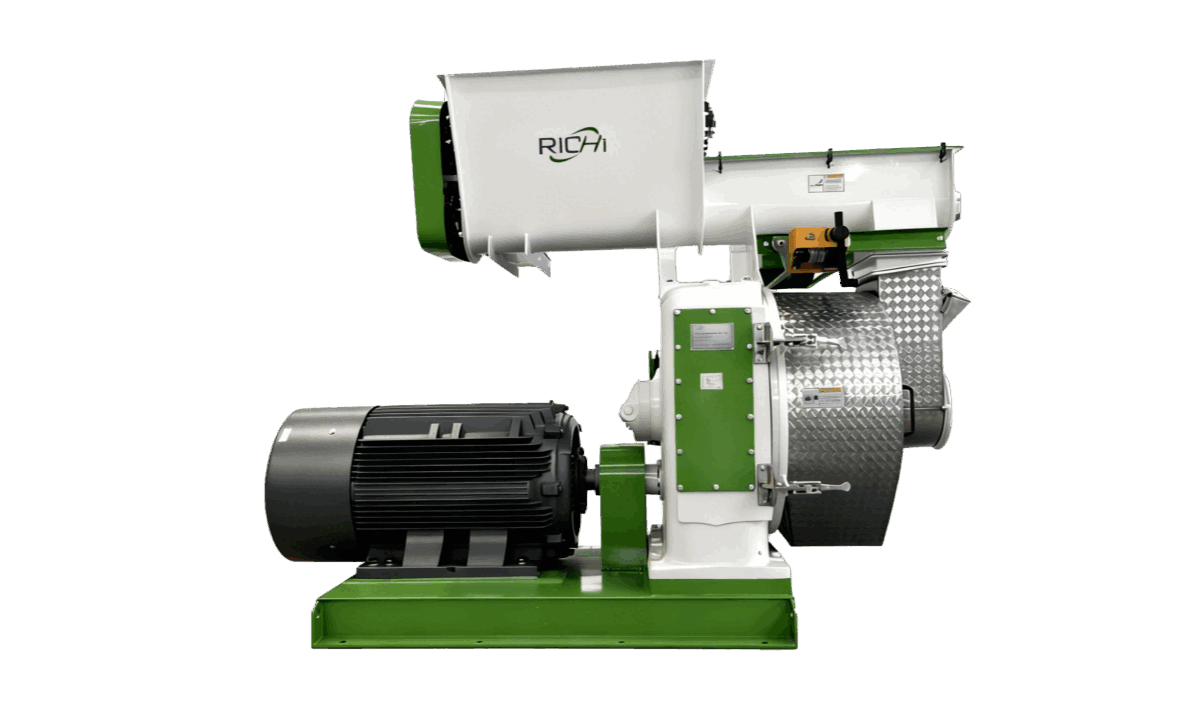
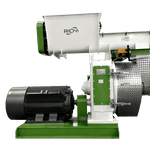
A properly selected bamboo pellet machine compresses the prepared biomass through a die to create cylindrical pellets.
Pressure, temperature, raw material characteristics, die configuration, and feeding stability all influence the final result.
The goal is not simply to make pellets. The goal is to produce pellets that remain sufficiently durable during cooling, storage, transportation, and combustion.
Choosing Capacity According to the Business Model
Capacity selection should not begin with the question, “What is the biggest machine available?”
A better question is, “How much usable bamboo residue can the business consistently obtain?”
For example, a workshop generating several hundred kilograms of dry residues per day may not need a high-capacity industrial production line.
On the other hand, a bamboo processing factory with continuous residue generation may benefit from a larger automated system.
A medium-scale project may consider equipment around the 1–2 T/H range if the feedstock supply and downstream market justify that output.
For projects using mixed biomass rather than bamboo alone, a 1-4 T/H wood chip pellet machine for sale may also become relevant because the equipment configuration can potentially be adapted to different woody feedstocks.
The important point is to match machine capacity with actual material availability instead of selecting capacity based purely on marketing numbers.
What Makes Bamboo Pellets Attractive as Fuel?
Bamboo pellets have several characteristics that make them interesting for biomass energy applications.
First, pelletizing significantly increases bulk density compared with loose branches or chips.
Second, standardized pellets are easier to package and transport.
Third, the cylindrical shape makes automated feeding systems more practical.
Fourth, bamboo residues can be converted into a saleable energy product instead of being treated solely as waste.
Potential users include:
- Small industrial boilers
- Biomass heating systems
- Agricultural processing facilities
- Commercial heating applications
- Biomass fuel distributors
- Local energy businesses
Actual fuel performance depends on bamboo species, moisture content, ash characteristics, contamination, pellet density, and combustion equipment.
Therefore, testing the available raw material is recommended before commercial production.
How Equipment Configuration Changes with Raw Materials
Two bamboo pellet projects can have completely different equipment configurations even if they have the same final capacity.
Consider two examples.
The first factory receives dry bamboo sawdust directly from a furniture manufacturing operation. The material is already small enough for pelletizing.
The second factory purchases whole bamboo poles and agricultural residues. These materials require chipping, crushing, drying, and possibly screening before pellet production.
The first project may have a relatively short process route.
The second requires a complete preparation system.
This is why experienced equipment suppliers generally need information about the raw material before recommending a final configuration. The correct solution is determined by material characteristics rather than by the product name alone.
The Role of a Complete Production System
Pelletizing is only one part of a commercial operation.
For a stable production process, operators may need feeding systems, conveyors, crushing equipment, drying systems, pellet mills, cooling equipment, screening units, and packing machinery.
In some applications, dust collection and automatic control systems are also important.
A supplier such as Richi Machinery may therefore be involved not only in supplying the core pellet machine but also in coordinating equipment for the complete process.
A complete system can reduce manual handling and improve production consistency, particularly as capacity increases.
Storage Should Be Considered Early
Many new pellet projects focus heavily on production but overlook storage.
Pellets can absorb moisture if they are stored under unsuitable conditions. Poor storage may reduce durability and create unnecessary handling losses.
A commercial facility should consider:
- Covered storage areas
- Moisture protection
- Ventilation
- Bulk or bagged storage
- Loading and transportation
- Fire prevention measures
- Inventory rotation
Packaging requirements also depend on the target market. Local industrial buyers may prefer bulk deliveries, while household or small commercial users may purchase bagged fuel.
Is Bamboo Pellet Production Suitable for Small Businesses?
It can be, especially in areas where bamboo residues are abundant and inexpensive.
The strongest business cases usually have three characteristics.
First, the raw material is available locally. Long-distance transportation of low-density loose biomass can quickly increase costs.
Second, there is a nearby market for biomass fuel.
Third, the operator can maintain stable production quality.
A small project can initially focus on a regional market instead of attempting to compete with large international fuel suppliers.
This localized approach may reduce logistics costs and make customer relationships easier to manage.
A Better Way to Evaluate the Investment
Instead of looking only at the machine purchase price, investors should estimate the entire production economics.
Important factors include:
- Raw material acquisition cost
- Transportation distance
- Electricity consumption
- Drying requirements
- Labor costs
- Maintenance expenses
- Packaging costs
- Pellet selling price
- Expected operating hours
- Annual raw material availability
This approach provides a much more realistic understanding of project profitability.
For readers comparing equipment specifications, find out here now about different pelletizing configurations and consider the complete process rather than evaluating the pellet mill alone.
Beyond Fuel: Other Opportunities
Although fuel is one of the most obvious applications, pelletized biomass can serve other markets depending on raw material quality and local demand.
Certain clean biomass residues may be considered for animal bedding or other non-food applications.
However, producers should never assume that fuel-grade bamboo pellets automatically meet requirements for bedding or other specialized products. Each market has different standards concerning cleanliness, moisture, particle size, additives, and contamination.
Therefore, product positioning should be decided before finalizing the production system.
Building a More Sustainable Bamboo Industry
Bamboo processing creates value at several levels. Finished bamboo products may generate the highest revenue, but their manufacturing residues still have economic value.
Turning these residues into pellets creates an additional revenue stream while improving resource utilization.
The most successful projects are likely to be those that treat pellet production as part of a broader resource-management strategy rather than as an isolated machinery purchase.
Bamboo waste that once required disposal can become a standardized energy product. With appropriate raw material preparation, moisture control, pelletizing, cooling, screening, and storage, even relatively low-value residues can enter a structured commercial supply chain.
The opportunity is therefore not simply about purchasing a machine. It is about designing a process that connects local bamboo resources with a practical end market.
As renewable energy demand develops, this type of circular biomass model may become increasingly relevant in bamboo-producing regions around the world.