
Across agricultural regions, large quantities of grains, forage, bran, crop by-products, and other materials are produced every year.
Some become animal feed directly. Others are underused because they are difficult to store, transport, mix, or handle.
Pelletizing offers one way to increase the practical value of many feed ingredients.
Instead of transporting loose powders or bulky forage, producers can process selected materials into compact, uniform pellets.
This can improve handling and storage while creating opportunities for farms and local feed businesses.
However, successful pellet production requires more than simply purchasing a machine.
Understanding the Material First
Every feed ingredient has physical characteristics.
Corn is relatively easy to grind.
Wheat bran has different flow characteristics.
Alfalfa and hay contain more fiber.
Soybean meal has a different protein profile.
Shrimp feed formulas may include fish meal, soybean meal, wheat products, minerals, and other ingredients.
These differences influence grinding, mixing, conditioning, and pellet formation.
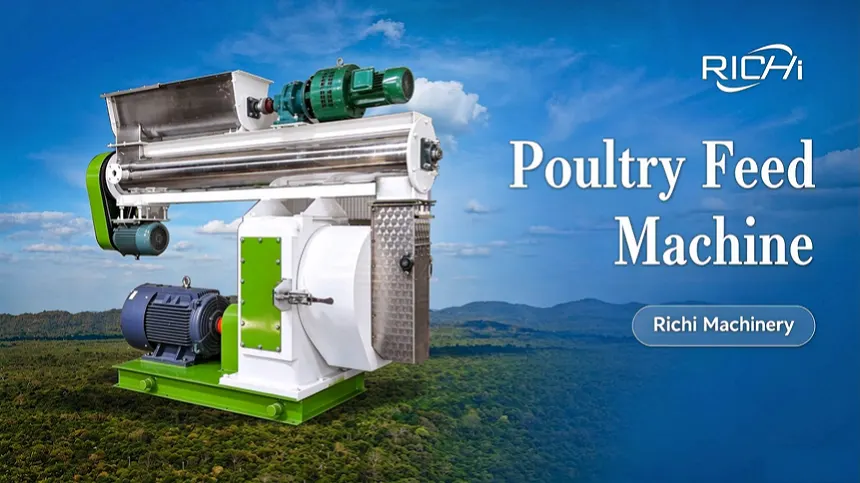
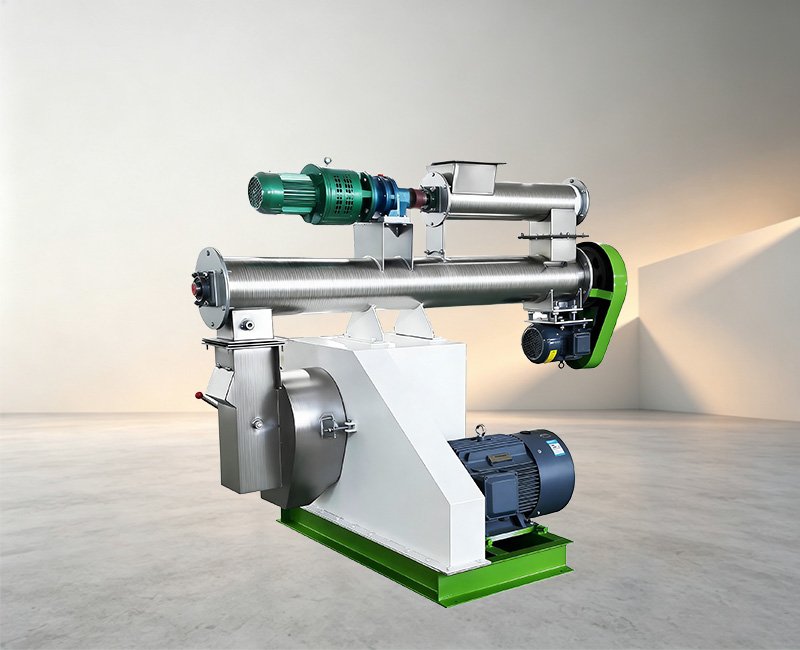
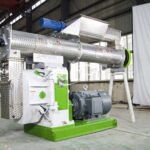
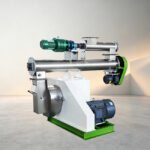
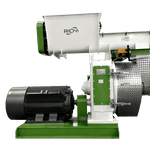
For this reason, a professional Animal Feed pellet mill should be selected after understanding the intended raw materials.
High-Fiber Materials Need Careful Handling
Forage-based feed can be challenging because of its high fiber content.
Alfalfa, grass, hay, and certain crop residues can be bulky and difficult to feed consistently into processing equipment.
Pre-processing becomes important.
The material may need cutting or coarse crushing before entering the main grinder.
Once the material reaches a suitable particle size, it can be mixed with grains and other ingredients.
The objective is to create a feed formula that can be processed efficiently while meeting nutritional requirements.
(Related Post: https://www.richipelletmill.com/chicken-feed-pellet-machine-for-sale/)
Why Pelletizing Adds Value
Loose feed has several disadvantages.
It may generate dust.
It can separate during transportation.
Bulky forage occupies more storage space.
Fine ingredients may be difficult to handle manually.
Pellets address several of these issues.
Compression increases bulk density and creates a more convenient product.
Pellets are easier to move using conveyors, elevators, and packaging systems.
They can also be stored in bags or bulk storage facilities.
For commercial farms, this can simplify feed handling.
Rabbit Feed Is a Good Example
Rabbit production often depends on forage and formulated feed.
A pellet format allows producers to combine different ingredients into a standardized product.
A 1-2 T/H rabbit pellet machine for sale can be suitable for businesses that need a moderate production scale and want to manufacture feed for their own farm or local market.
The exact production capacity, however, depends on the formula and material characteristics.
High-fiber formulas may perform differently from grain-rich formulas.
Therefore, production testing is useful before final equipment selection.
Goat Feed Offers Another Opportunity
Goat farms can also benefit from pelletized feed.
A typical formula may include grains, bran, protein meals, forage, minerals, and other ingredients.
Pelletizing can help combine these ingredients into a uniform product.
For regional producers, this can create a new commercial opportunity.
Instead of selling raw agricultural materials, farmers or cooperatives can process them into higher-value feed products.
This approach can also create demand for locally sourced ingredients.
The Hidden Importance of Moisture
Moisture affects almost every stage of feed production.
Too much moisture can cause poor storage stability.
Too little moisture can make pellet formation difficult.
The moisture content of raw materials can also vary significantly according to season and storage conditions.
For example, freshly harvested forage may behave differently from properly dried forage.
A good production system therefore needs to account for material moisture rather than relying on fixed settings throughout the year.
Conditioning Connects Preparation With Pelletizing
Conditioning is the transition point between prepared feed and pellet formation.
Steam or moisture can help soften feed particles and improve binding.
The conditioner also gives the material time to reach a more uniform physical state.
The ideal conditioning process varies according to formula and equipment.
For some feed products, stronger conditioning can improve pellet durability.
For other products, excessive moisture or heat may create downstream challenges.
This is why experienced operators monitor both the material and the finished pellet.
Why Die Selection Matters
The die determines the diameter of the pellet.
But the die also influences compression and production performance.
Different feed formulas may require different compression ratios.
A dense formula and a high-fiber formula may not behave identically under the same die configuration.
Changing pellet diameter can also affect production capacity.
Therefore, the die should be selected according to the product rather than simply choosing the largest available opening.
Shrimp Feed Changes the Equation
The principles of pelletizing remain similar for shrimp feed, but the required precision can be much higher.
Shrimp feed often requires small pellet sizes.
The feed also needs to maintain structural integrity in water.
If the pellet breaks down too quickly, nutrients can disperse into the water before being consumed.
This is why shrimp feed plants may require finer grinding, specialized dies, longer conditioning, and careful post-processing.
A suitable pellet maker should therefore be part of a broader process design rather than selected only according to its nominal output.
Production Line Integration
A feed plant is a chain of processes.
If one section operates poorly, the entire production line can be affected.
For example:
Poor grinding → inconsistent mixing.
Poor mixing → nutritional variation.
Poor conditioning → unstable pellet formation.
Poor cooling → storage problems.
Poor screening → excessive fines.
Poor packaging → product handling problems.
This demonstrates why production line engineering is often more important than choosing a single machine.
From Manual Production to Semi-Automatic Processing
Many agricultural businesses begin with manual operations.
Workers weigh ingredients, move materials, mix formulas, and package finished feed.
As production increases, labor becomes a bottleneck.
Semi-automatic systems can gradually reduce this workload.
Automatic conveyors, batching systems, mixers, feeders, and packaging machines can improve production consistency.
The transition does not need to happen all at once.
A plant can be upgraded section by section.
What Should Buyers Ask Before Purchasing?
Before investing in feed processing equipment, buyers should prepare a basic technical profile.
It should include:
- Target feed type.
- Raw material list.
- Raw material moisture.
- Desired pellet diameter.
- Required capacity.
- Expected working hours per day.
- Available electrical power.
- Workshop dimensions.
- Packaging requirements.
- Future expansion plans.
Providing this information allows engineers to recommend a more appropriate configuration.
Production Efficiency Is More Than Output
Suppose two plants produce the same number of tons per day.
One requires more labor, generates more fines, consumes more electricity, and experiences frequent downtime.
The other operates more consistently with lower operating costs.
Clearly, output alone does not tell the whole story.
This is why feed manufacturers should evaluate production efficiency using multiple indicators.
These include energy consumption per ton, pellet durability, labor requirements, downtime, maintenance frequency, and raw material utilization.
Building a More Sustainable Feed Business
Using local ingredients can support agricultural economies.
Pelletizing can make certain by-products easier to handle and transport.
Better production planning can reduce material waste.
Efficient cooling and screening can improve product recovery.
These improvements can contribute to a more sustainable business model.
The goal is not simply to produce more feed.
It is to extract more value from available resources.
Where to Continue Your Research
If you are comparing pelletizing technologies, feed formulas, or production line configurations, look at this website for additional information and technical references.
The most important lesson is simple: feed production should begin with the raw material and final application, not with a machine catalogue.
When the material, formula, process, and equipment are properly matched, agricultural resources can be transformed into a more valuable and manageable feed product.