

Agriculture has always generated enormous amounts of renewable resources. Every year, farmers harvest crops and leave behind millions of tons of agricultural residues, including wheat straw, rice straw, corn stalks, and other plant materials.
For many years, these residues were considered a disposal problem. Farmers often burned straw in open fields or left it unused because traditional utilization methods could not create enough economic value.
However, this situation is changing rapidly.
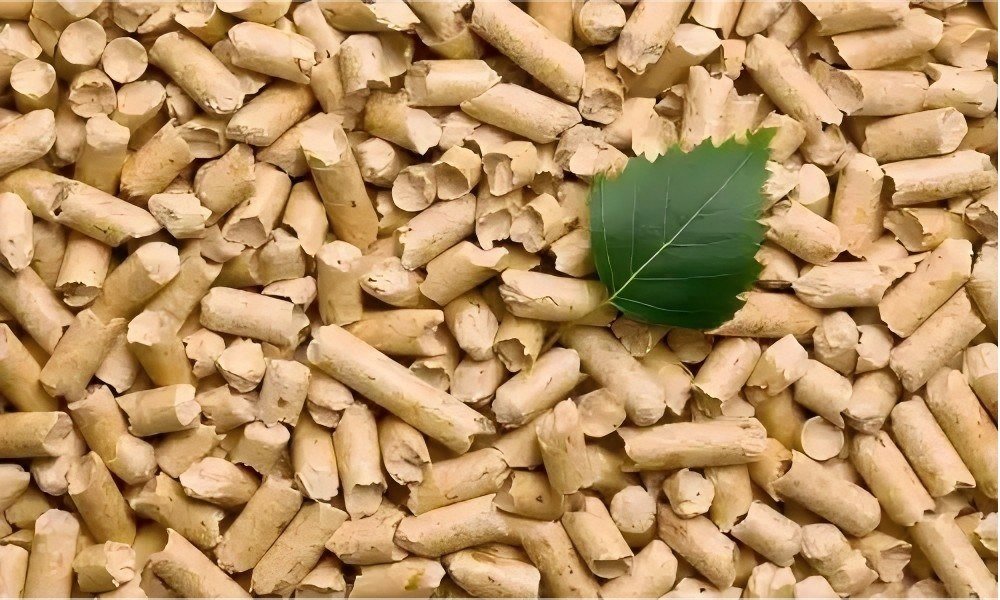
With increasing demand for renewable energy, sustainable farming, and waste recycling, agricultural residues are becoming valuable industrial resources. Modern pellet technology allows companies to transform low-value straw into high-density biomass products with commercial potential.
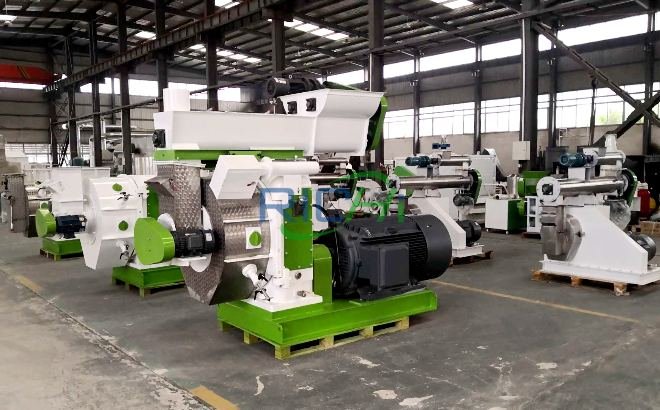
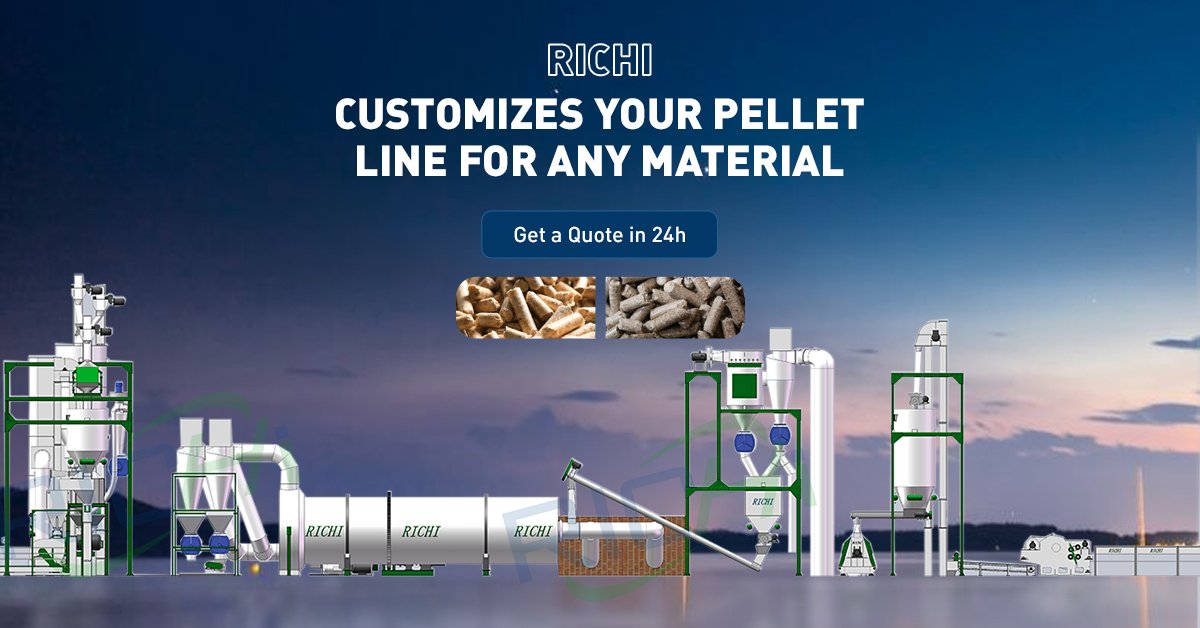
A complete straw pellet production line provides an efficient solution for processing agricultural waste into fuel pellets, animal bedding, and other valuable biomass products.
This transformation is not only environmentally beneficial but also creates new revenue opportunities for agricultural enterprises.
From Agricultural Waste to Business Opportunity
The concept of turning waste into profit has attracted attention from investors worldwide.
Traditional agricultural waste management creates several problems:
- High disposal costs
- Environmental pollution
- Loss of potential income
- Limited resource utilization
By comparison, pellet production provides a new business model.
Farmers and agricultural companies can collect local biomass resources and process them into standardized products.
The advantages include:
- Easy transportation
- Long storage period
- Stable market demand
- Multiple application areas
This makes biomass pellet production an attractive investment for regions with abundant agricultural resources.
Why Straw Pellets Have Strong Market Potential
The global transition toward renewable energy is creating new demand for biomass fuels.
Many industries are searching for alternatives to fossil fuels because of:
- Increasing energy prices
- Carbon emission reduction targets
- Environmental regulations
- Energy security concerns
Straw pellets provide an effective solution because they are:
Renewable
Agricultural residues are naturally regenerated every growing season.
Economical
Compared with many traditional fuels, straw can be obtained at relatively low cost.
Convenient
Pellets are easier to handle, transport, and store compared with loose biomass.
Versatile
They can be used in different industries, including:
- Biomass power generation
- Industrial heating
- Commercial boilers
- Animal bedding production
How Modern Straw Pellet Production Works
A successful pellet project requires more than a single pellet machine. A complete production system integrates multiple processes to guarantee stable quality.
Step 1: Raw Material Preparation
The first stage involves collecting and preparing straw materials.
Common raw materials include:
- Wheat straw
- Rice straw
- Corn straw
- Soybean straw
- Grass
- Hay
Since different materials have different fiber structures, proper preparation is necessary before pelletizing.
Step 2: Crushing and Processing
Large straw pieces cannot directly enter the pellet mill.
A crushing system reduces the material size and improves:
- Feeding efficiency
- Material mixing
- Compression performance
Uniform particle size helps produce stronger pellets.
Step 3: Moisture Adjustment
Moisture is one of the most important factors affecting pellet quality.
The ideal moisture level depends on:
- Raw material type
- Production environment
- Pellet requirements
Professional drying equipment ensures materials reach suitable conditions before compression.
Step 4: Pellet Formation
During pelletizing, prepared biomass passes through a die under high pressure.
The combination of pressure and heat activates natural lignin inside the material, helping particles bind together.
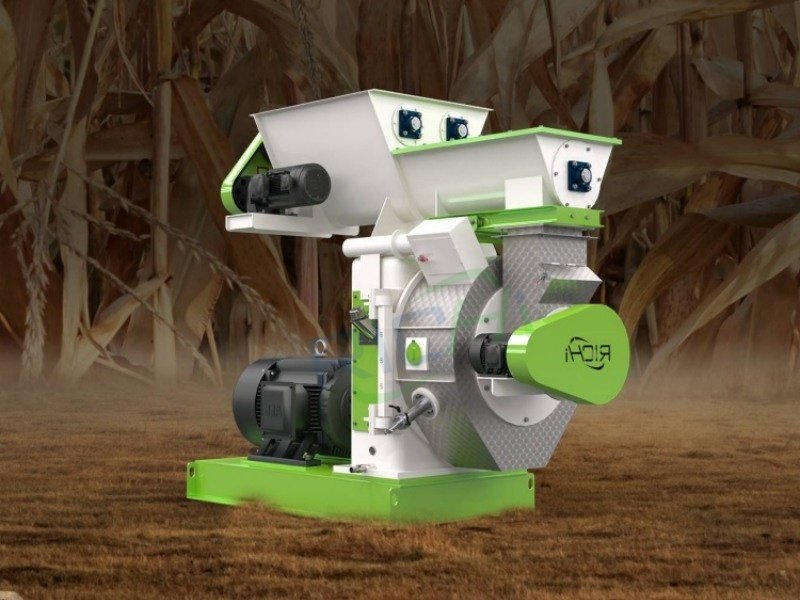
For businesses starting with moderate production requirements, equipment such as the 1-2 T/H hay pellet machine for sale can provide an efficient solution for processing various forage and agricultural materials.
Step 5: Cooling and Packaging
Fresh pellets are hot and relatively soft when leaving the pellet mill.
Cooling improves:
- Hardness
- Durability
- Storage performance
After screening, finished pellets can be packaged for different markets.
Why Complete Production Lines Are Better Than Individual Machines
Some investors initially consider purchasing only a pellet machine. However, commercial production involves many connected processes.
A complete system provides advantages such as:
Better Equipment Matching
Each machine is designed according to production capacity.
Higher Production Stability
Integrated systems reduce operational problems.
Easier Management
A centralized control system simplifies operation.
Lower Long-Term Costs
Proper equipment configuration reduces energy consumption and maintenance expenses.
A complete straw pellet processing line allows businesses to focus on production rather than solving compatibility issues between separate machines.
Expanding Beyond Straw: Flexible Biomass Processing
One of the biggest advantages of modern pellet factories is their ability to process multiple materials.
Depending on regional availability, producers can utilize:
- Straw
- Grass
- Hay
- Alfalfa
- Corn stalks
- Sawdust
- Wood residues
This flexibility improves factory utilization throughout the year.
For example, when straw availability decreases after harvest season, producers can switch to other biomass materials to maintain continuous operation.
Choosing the Right Production Capacity
Capacity planning directly affects investment success.
A small project may focus on supplying local customers, while larger factories may target industrial buyers or export markets.
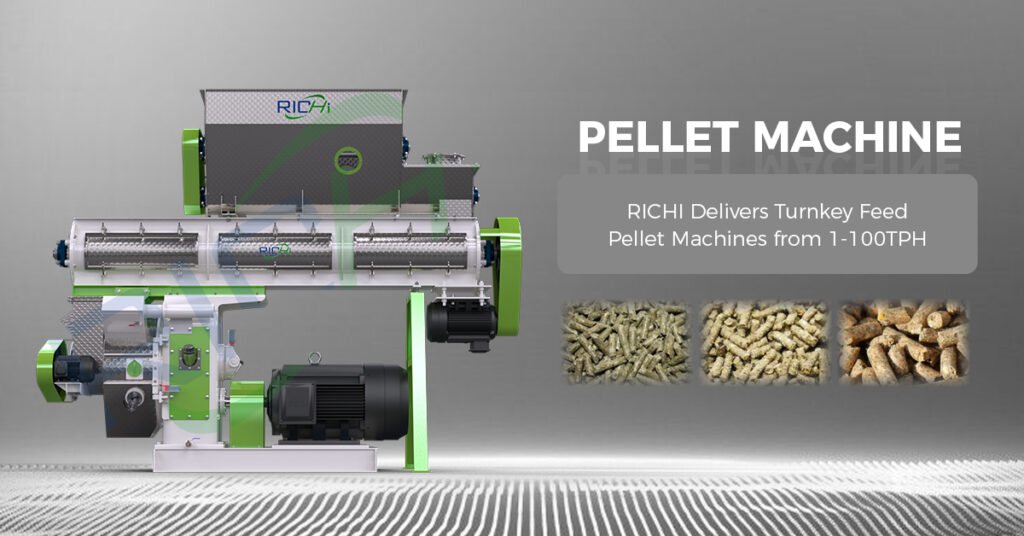
Medium and large agricultural companies often choose equipment such as the 3-4 T/H hay pellet making machine for sale to meet commercial production requirements.
When selecting capacity, investors should consider:
- Available raw materials
- Target customers
- Expected production volume
- Investment budget
- Future expansion plans
Choosing the correct capacity avoids unnecessary investment pressure while supporting future growth.
The Role of Equipment Manufacturers
Equipment suppliers play an important role in project success.
A professional manufacturer should provide more than machinery.
Important services include:
- Production line design
- Equipment selection
- Factory layout planning
- Installation support
- Technical training
- After-sales service
Experienced manufacturers understand that every project has different requirements.
Factors such as climate, raw material type, electricity conditions, and market demand all influence equipment design.
Companies working with Richi Pellet Machine solutions can benefit from customized production planning and professional biomass processing experience.
How Automation Improves Modern Pellet Factories
Technology has greatly improved biomass production efficiency.
Modern systems often include:
Automatic Feeding
Ensures stable material supply and reduces labor requirements.
Intelligent Control Panels
Operators can monitor production conditions easily.
Safety Protection Systems
Automatic alarms help prevent equipment damage.
Data Monitoring
Production information helps managers optimize operations.
Automation allows factories to achieve consistent output with fewer workers.
Economic Benefits for Agricultural Communities
Straw pellet production does not only benefit investors.
It can also support local agricultural development.
Benefits include:
- Creating new employment opportunities
- Increasing farmer income
- Improving waste management
- Supporting local industries
Instead of treating crop residues as waste, communities can build a complete biomass value chain.
Farmers provide raw materials, factories process pellets, and customers receive renewable products.
Environmental Impact of Straw Pellet Manufacturing
The environmental advantages are significant.
Reduced Straw Burning
Many agricultural regions struggle with pollution caused by open burning.
Pellet production provides a cleaner alternative.
Lower Carbon Emissions
Biomass fuels contribute to reducing dependence on fossil energy.
Improved Resource Efficiency
Every part of agricultural production can create additional value.
This supports global sustainability goals and circular economy development.
Future Development of the Biomass Pellet Industry
The biomass pellet market continues evolving.
Future trends include:
- More automated factories
- Higher production efficiency
- Better raw material utilization
- International biomass trading
- Customized pellet solutions
As renewable energy demand continues increasing, agricultural biomass will become an increasingly important resource.
Companies researching biomass opportunities can site here to explore additional technical information and discover practical production solutions.
Conclusion
Agricultural straw is no longer simply a leftover from farming. With modern pellet technology, it can become a profitable renewable resource.
A professional straw pellet production line helps companies transform agricultural residues into valuable products while supporting environmental protection.
From small agricultural businesses to large industrial producers, successful projects depend on selecting suitable equipment, understanding market needs, and building efficient production systems.
With experienced partners such as Richi Pelletizer, investors can develop reliable biomass pellet projects designed for long-term commercial success.
The future of agriculture is not only about producing crops—it is also about maximizing the value of every resource created during the process.
(Related Post: https://biomasspelletizer.com/alfalfa-pellet-machine-for-sale/)